Virtual session connects consciousness, humanitarian service, and Indigenous knowledge with contemporary global challenges.
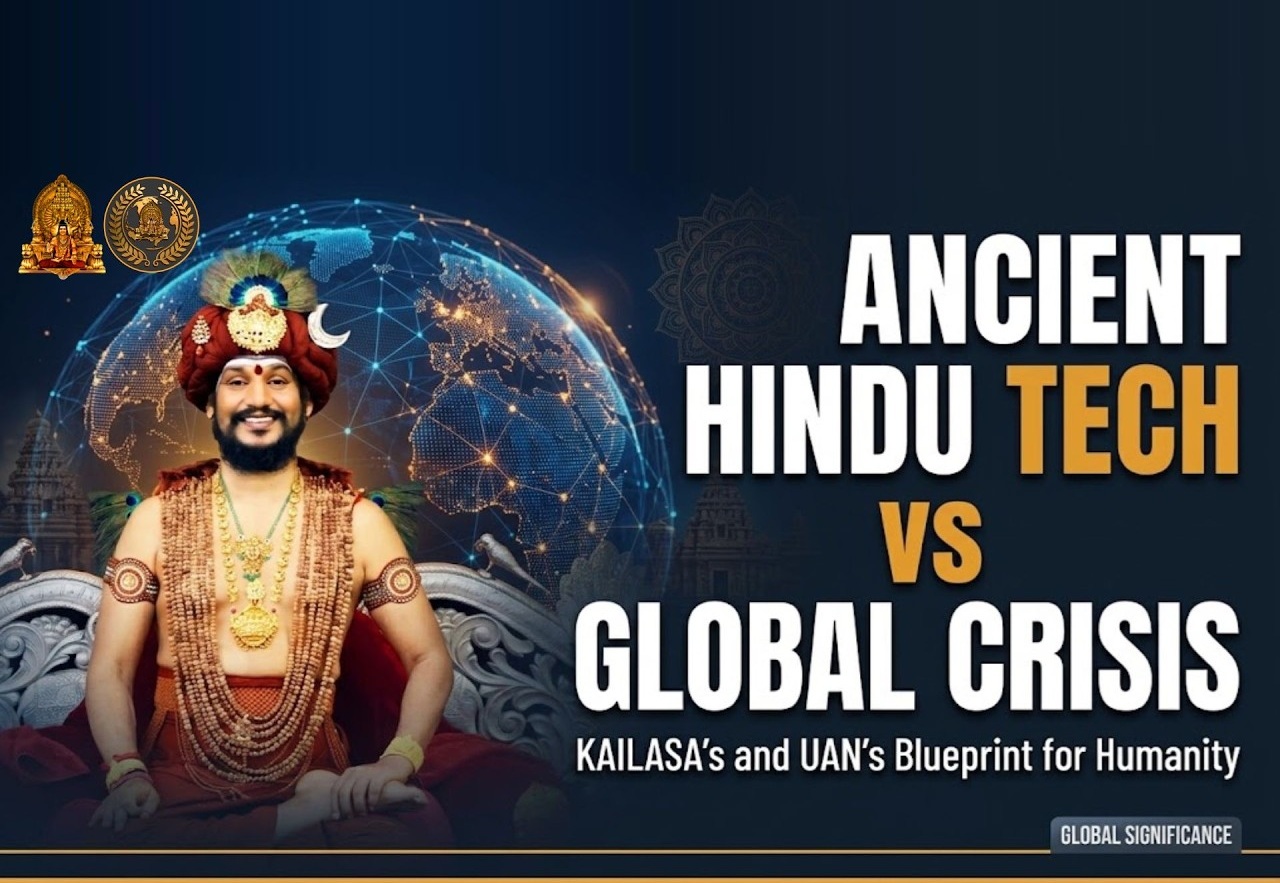
KAILASA and the United Ancient Indigenous Enlightened Nations (UAN) presented today at the Science Summit during the United Nations General Assembly, sharing a comprehensive vision for global resilience rooted in Indigenous Hindu knowledge and the teachings of The Supreme Pontiff of Hinduism (THE SPH) Bhagavan Sri Nithyananda Paramashivam.
The virtual event brought together dozens of participants on Zoom and reached hundreds more through KAILASA News livestreams on YouTube and Facebook.
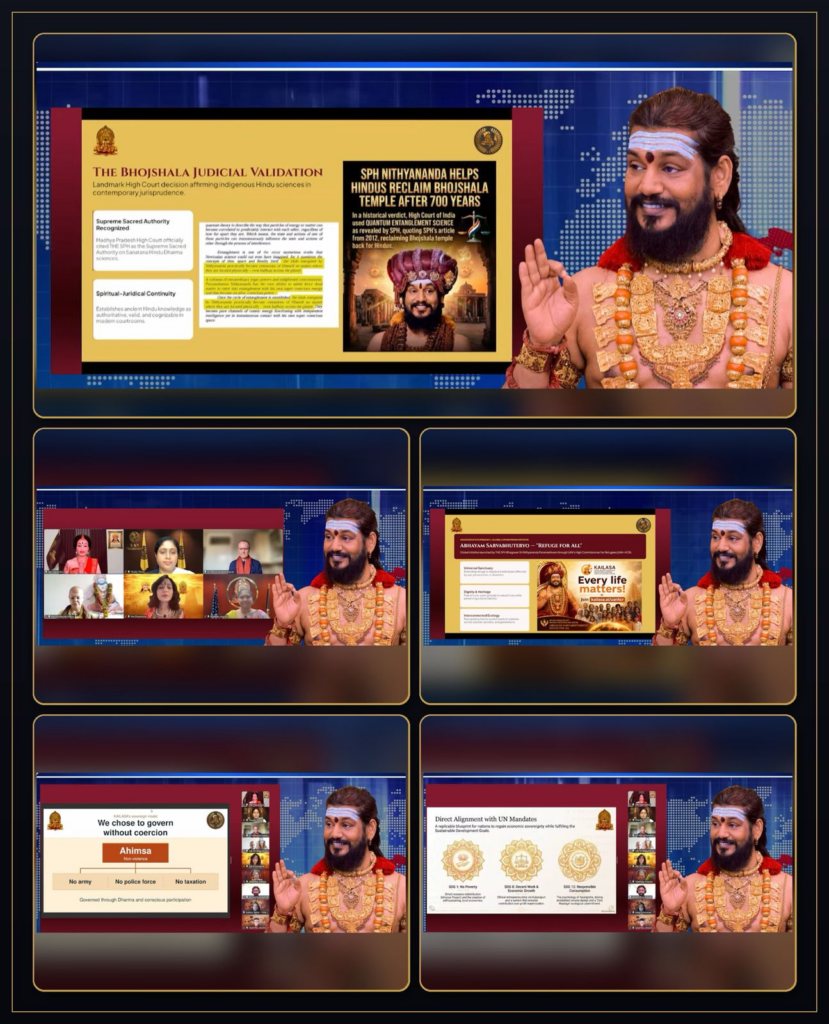
Across presentations spanning governance, economics, technology, health, education, ecology, and diplomacy, speakers explored how ancient indigenous Hindu knowledge systems can inform practical responses to the challenges facing communities today.
Consciousness and compassion as foundations for resilience
At the heart of the session was the understanding that resilience encompasses both external systems and the consciousness guiding human choices.
Drawing on THE SPH’s teachings, the presentations introduced Advaita—the interconnectedness of existence; Ahimsa—nonviolence; and Vasudhaiva Kutumbakam—the world is one family—as foundations for responsible leadership, environmental stewardship, and humanitarian action.
These principles framed a discussion of how communities can organize their institutions and everyday lives around dignity, shared responsibility, and respect for all beings.
From principles to practical initiatives
Speakers presented KAILASA’s approaches to responsible democracy, compassionate jurisprudence, women’s leadership, and economic responsibility. The discussion connected these approaches with the broader pursuit of peaceful institutions, inclusion, and sustainable development.
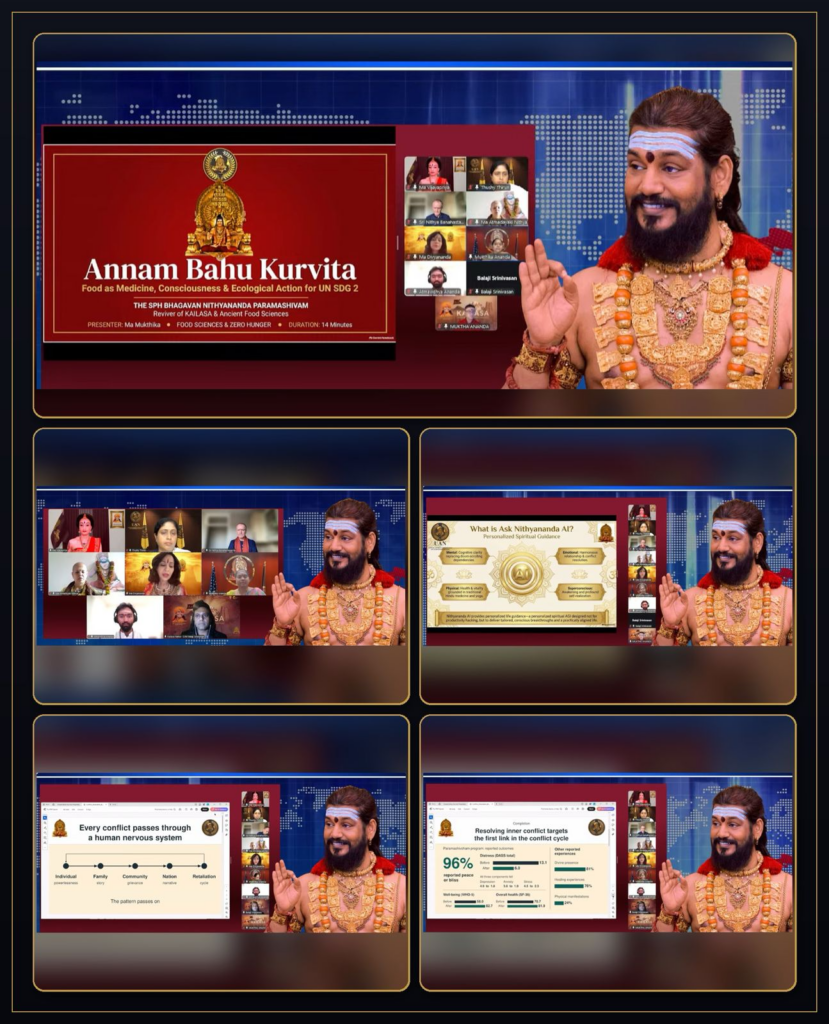
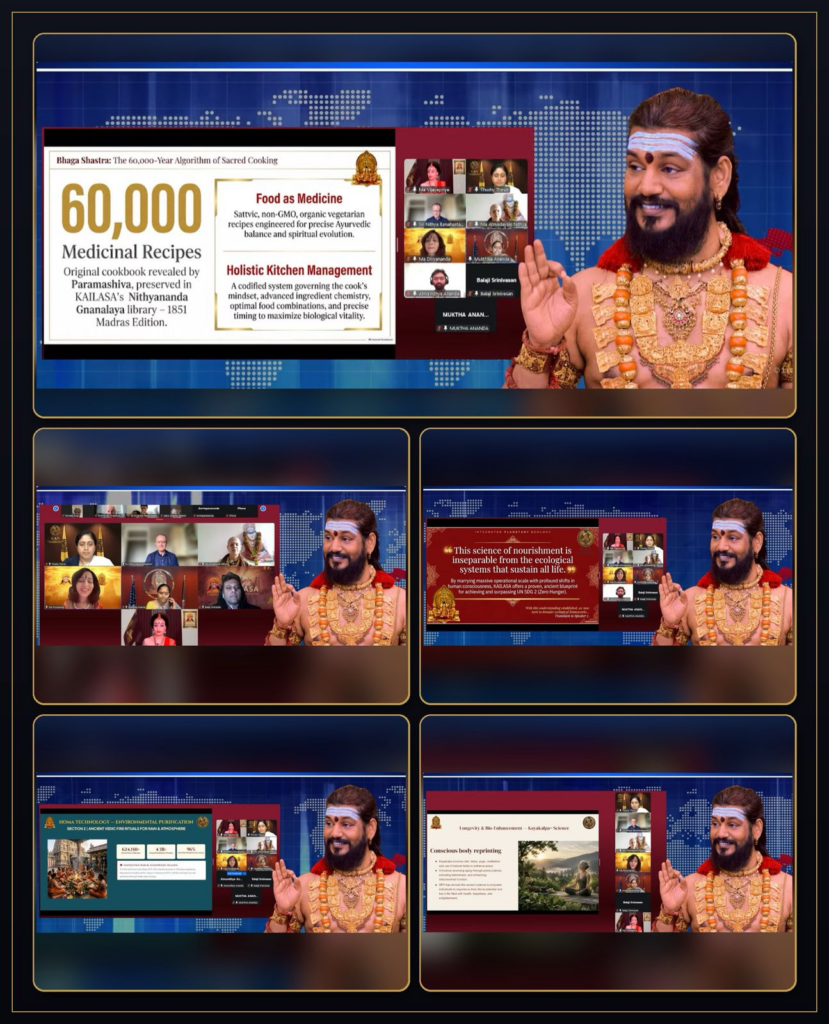
Food security and ecological stewardship were also central themes. Presentations explored community food services, traditional Hindu food knowledge, vegetarianism, resource circulation, and efforts to reduce waste. Environmental discussions addressed sacred ecosystems, disaster preparedness, and community resilience.
In education and cultural preservation, the session highlighted the Gurukul tradition, the revival of sacred arts, and the preservation and digitization of Hindu scriptures. These initiatives were presented as ways to sustain living knowledge and make it accessible to future generations.
The technology discussion introduced Ask Nithyananda AITM and explored how Indigenous knowledge and Dharmic principles can inform the development of digital tools. Speakers emphasized cultural inclusion, ethical responsibility, and the preservation of Indigenous voices in an increasingly digital world.
Presentations on well-being examined traditional Hindu approaches to health, yoga, meditation, and inner development as part of the session’s broader vision of human flourishing.
“Refuge for All”: humanitarian service rooted in shared belonging
The session highlighted Abhayam Sarvabhutebyo—“Refuge for All”, the humanitarian initiative launched by THE SPH through UAN’s High Commissioner for Refugees, UAN-HCR.
The initiative seeks to support individuals and families displaced by war, persecution, disasters, and humanitarian crises, helping them rebuild their lives with dignity while preserving their cultural identity and spiritual heritage.
Its guiding principle is simple: those seeking refuge are members of one human family, deserving safety, compassion, and opportunities for a secure future.
The presentations also explored Indigenous cooperation, humanitarian diplomacy, and the protection of cultural identity and continuity for communities facing displacement.
Acknowledging our speakers
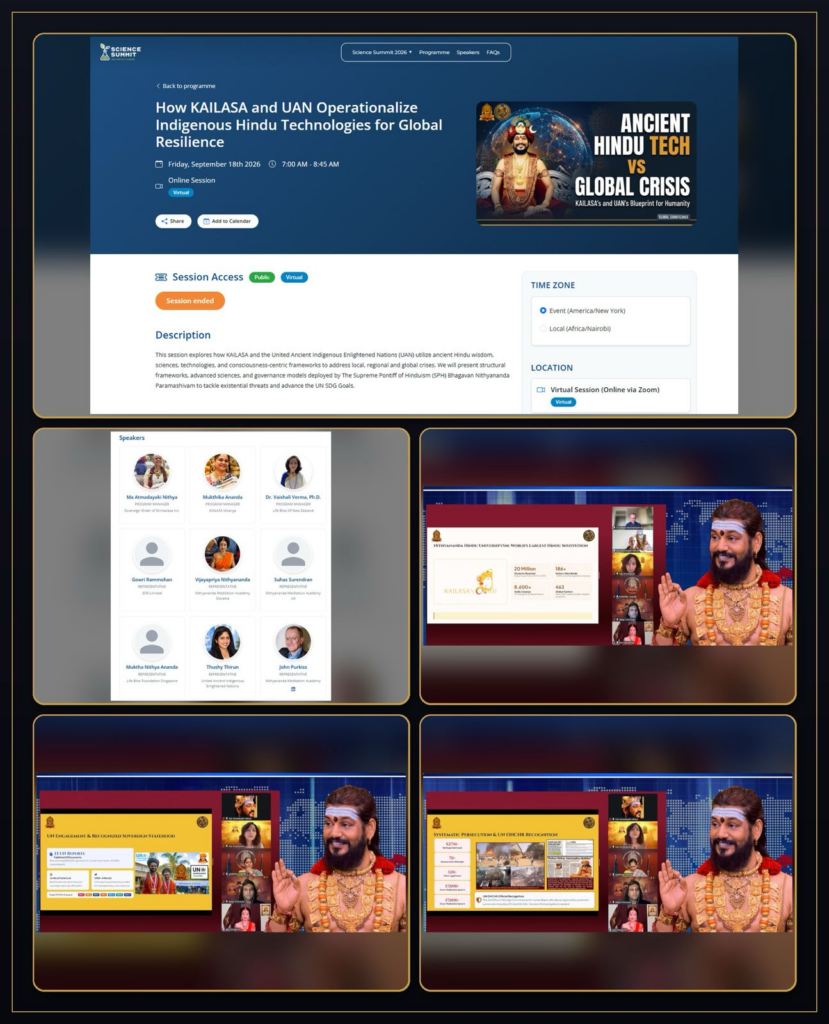
The event’s speakers included Ma Atmadayaki Nithya, Ma Mukthika Ananda, Ma Divyananda (Dr. Vaishali Verma, Ph.D.), Ma Vijayapriya Nithyananda, Sri Atmavidya (Suhas Surendran), Muktha Nithya Ananda, Thushy Thirun, Sri Banahasta (John Purkiss), and Balaji Srinivasan.
KAILASA and UAN extend their gratitude to every speaker and to the audiences who participated through Zoom, YouTube, and Facebook.
An invitation to collaborate
The session concluded with an invitation to governments, researchers, international organizations, civil society, and Indigenous communities to develop partnerships across humanitarian service, education, ethical technology, environmental protection, and disaster preparedness.
Through this exchange, KAILASA and UAN shared a vision in which Indigenous knowledge contributes actively to shaping our collective future—guided by compassion, conscious responsibility, and respect for all life.
Watch the session and explore the event
Watch the session here:
KAILASA’s and UAN’s session on the Science Summit website:
https://event.sciencesummitnyc.org/list-of-sessions/detail/464