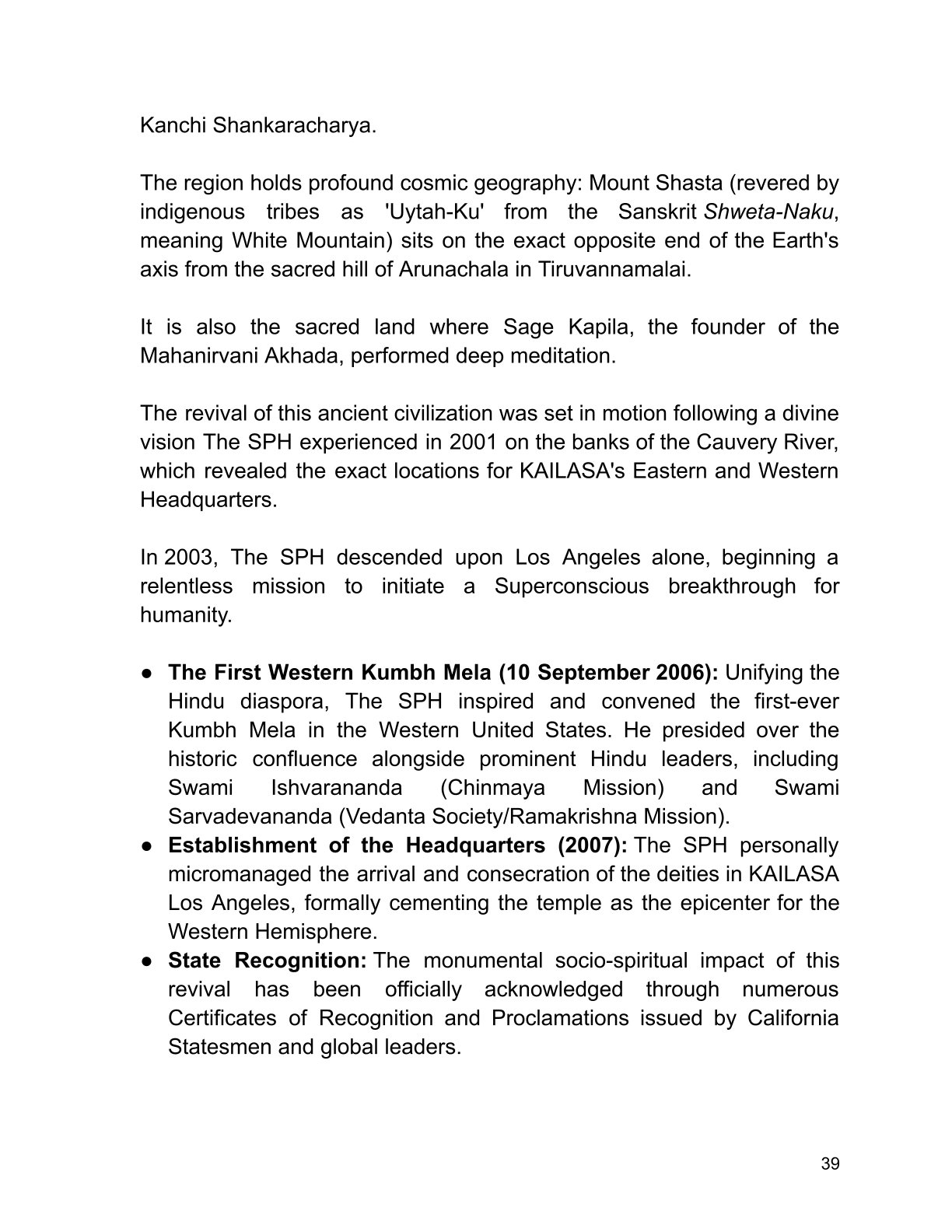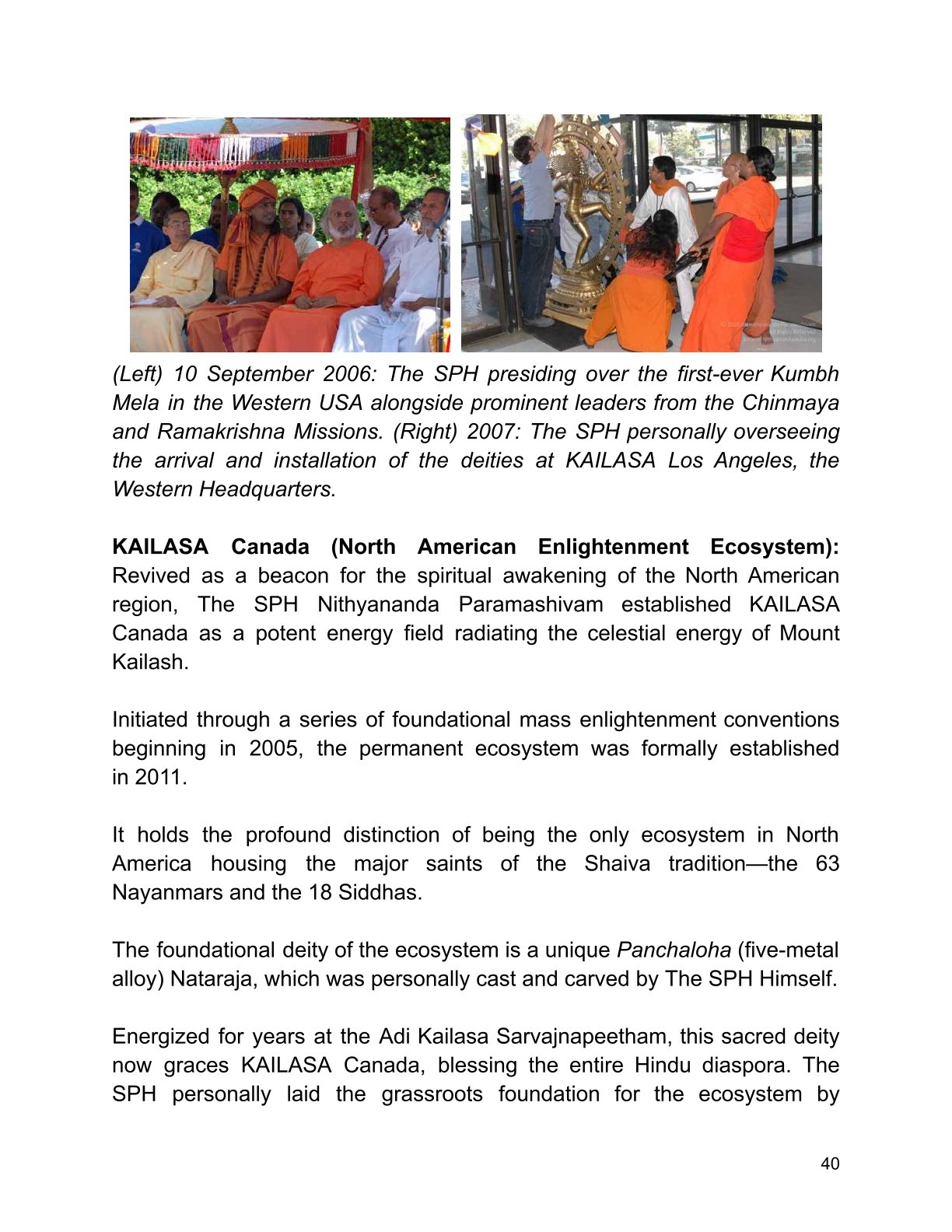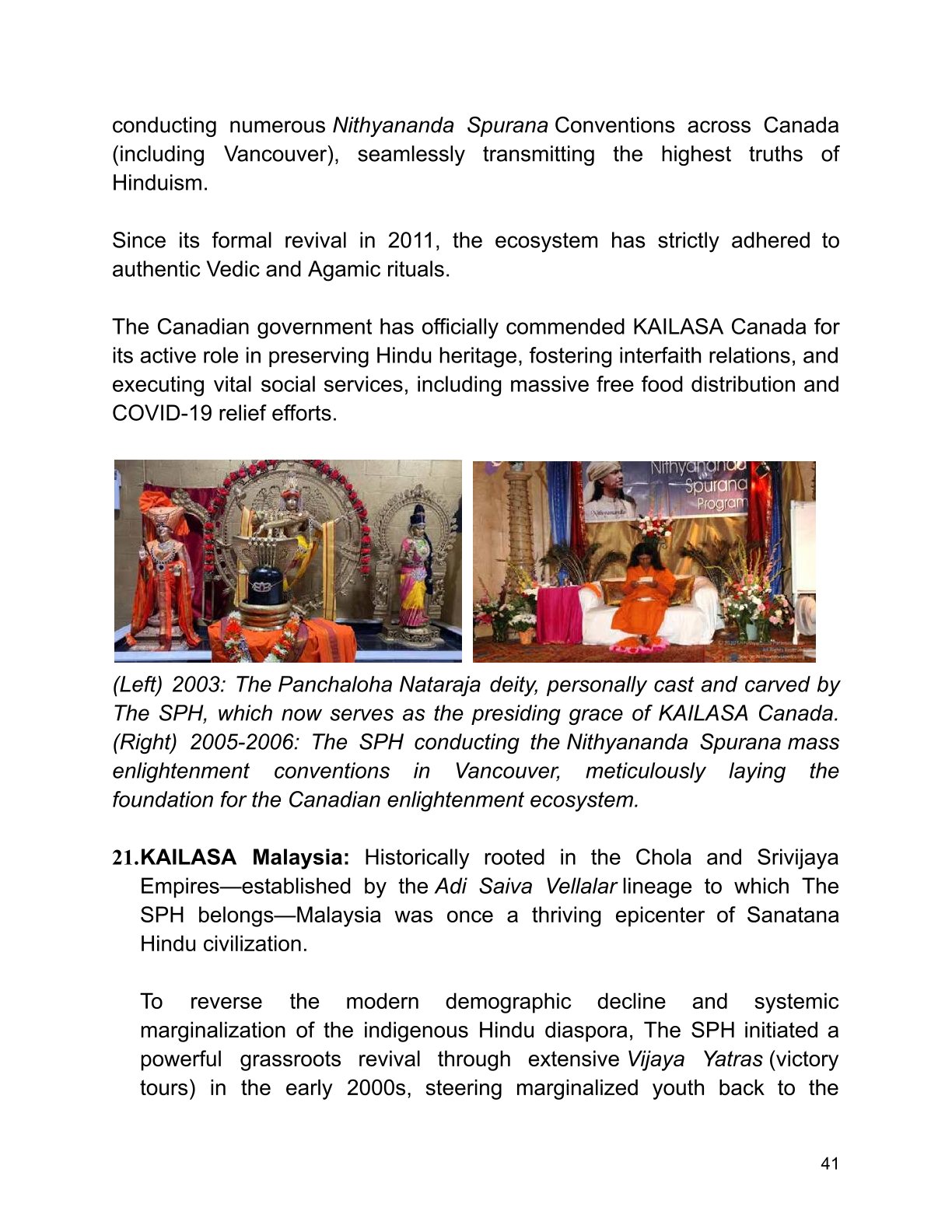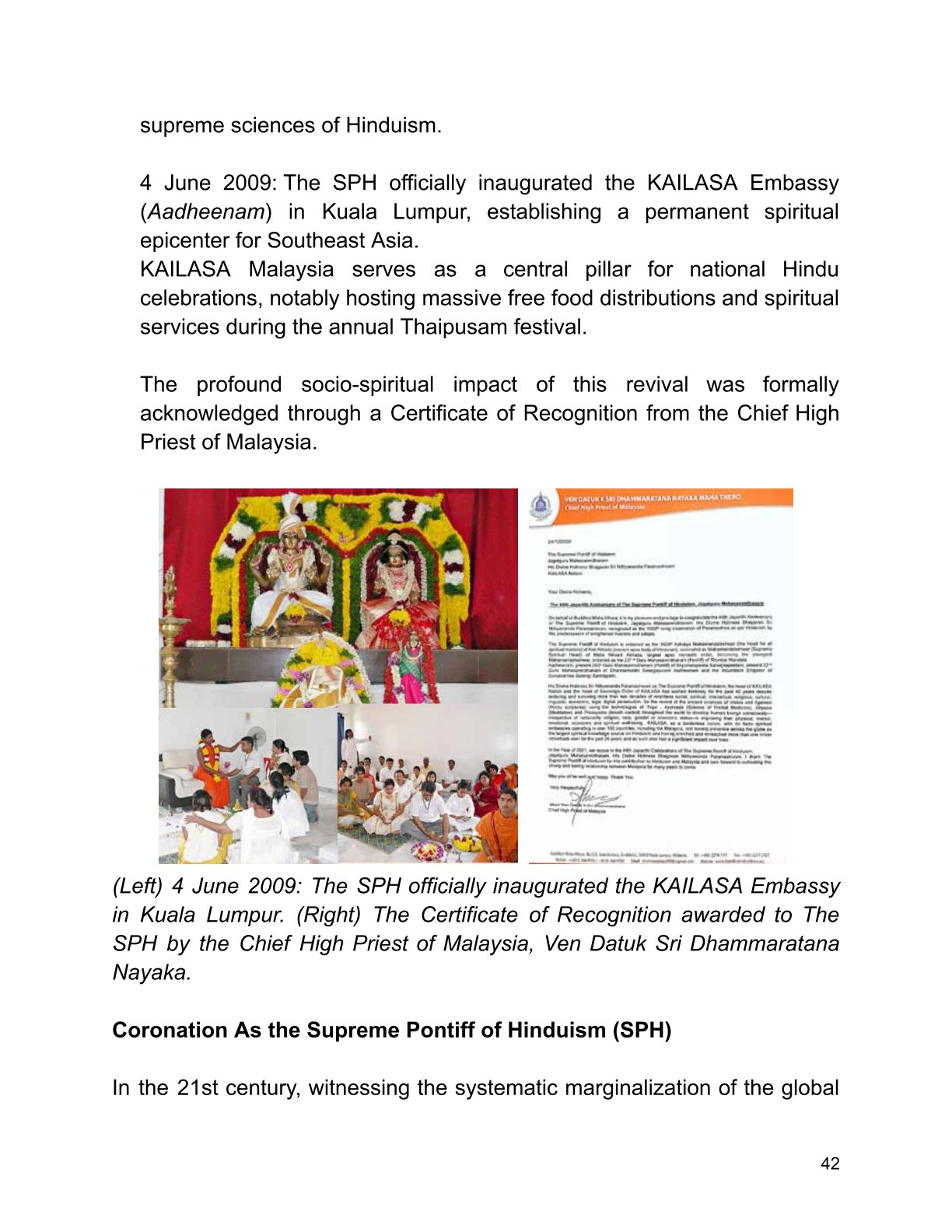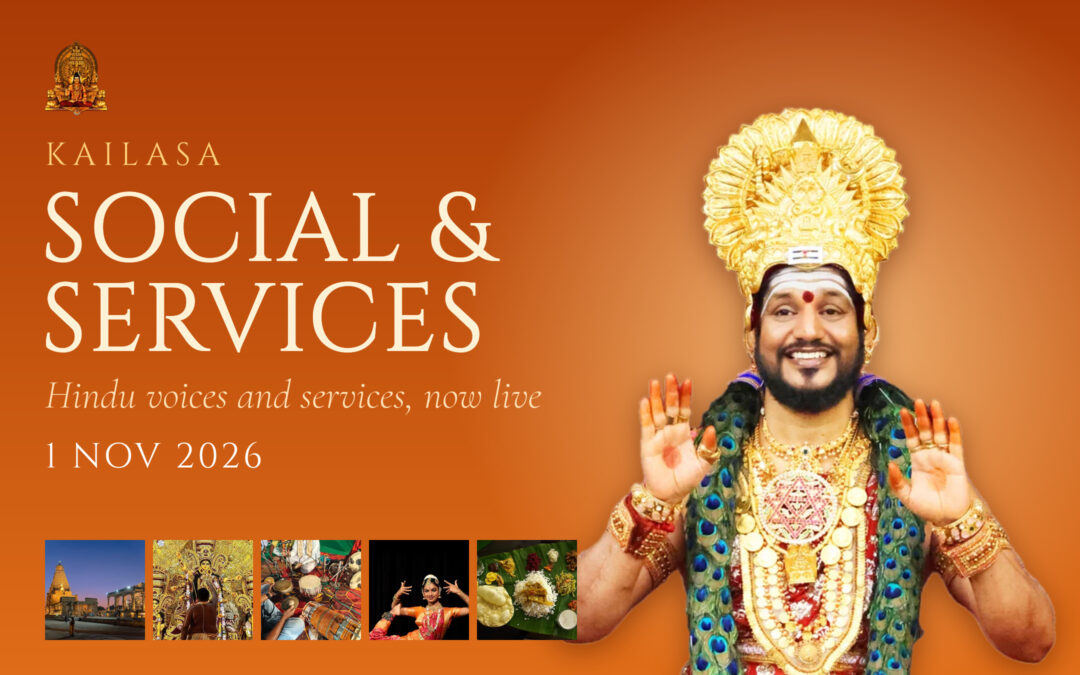
KAILASA Announces KAILASA Social and KAILASA Services, Welcoming Hindus Worldwide

KAILASA Announces KAILASA Social and KAILASA Services, Welcoming Hindus Worldwide

FOR IMMEDIATE RELEASE

1 NOVEMBER 2026 — KAILASA announces KAILASA Social and KAILASA Services, two digital platforms welcoming Hindus worldwide to discover Hindu content, follow creators and find providers for religious and cultural needs.
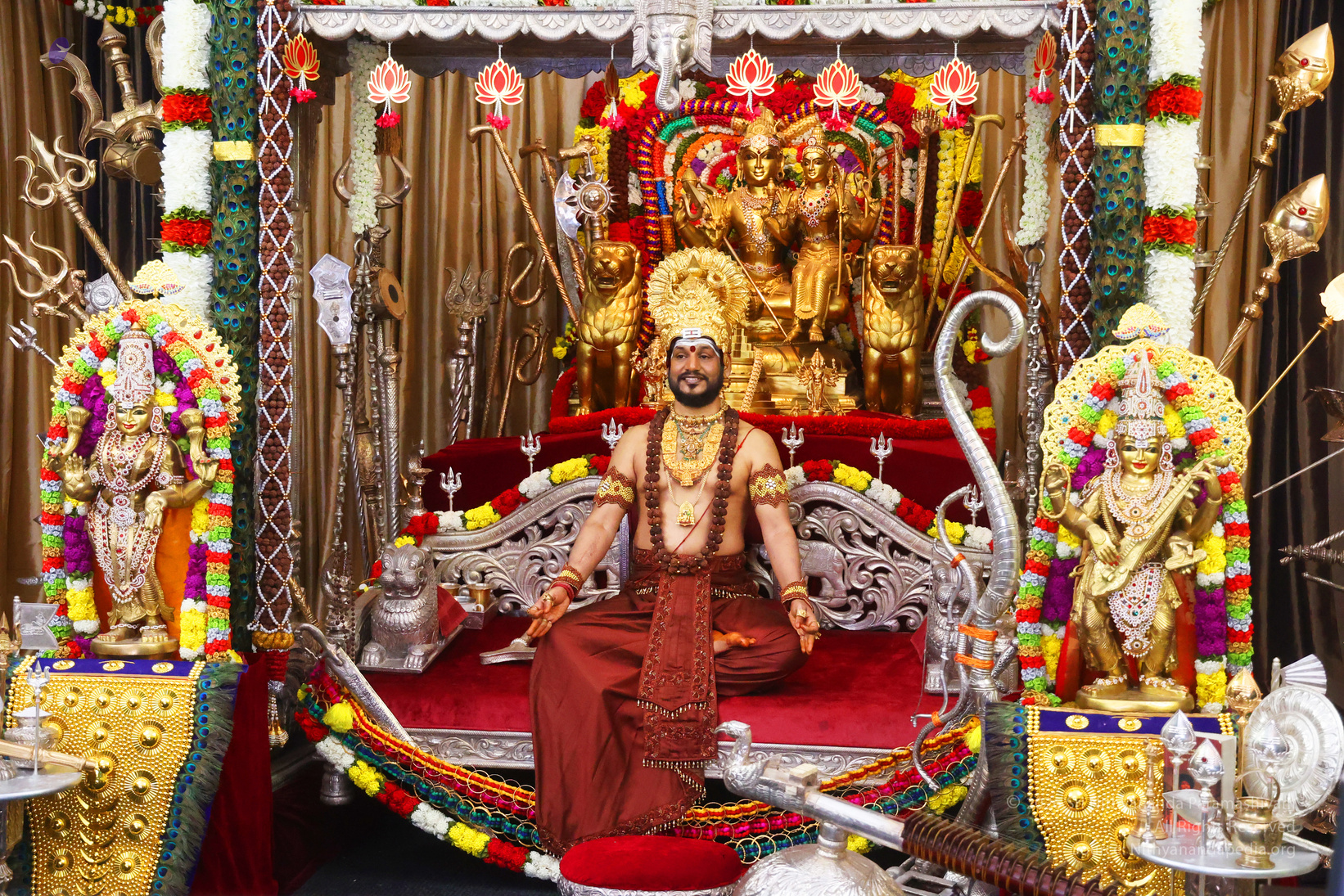
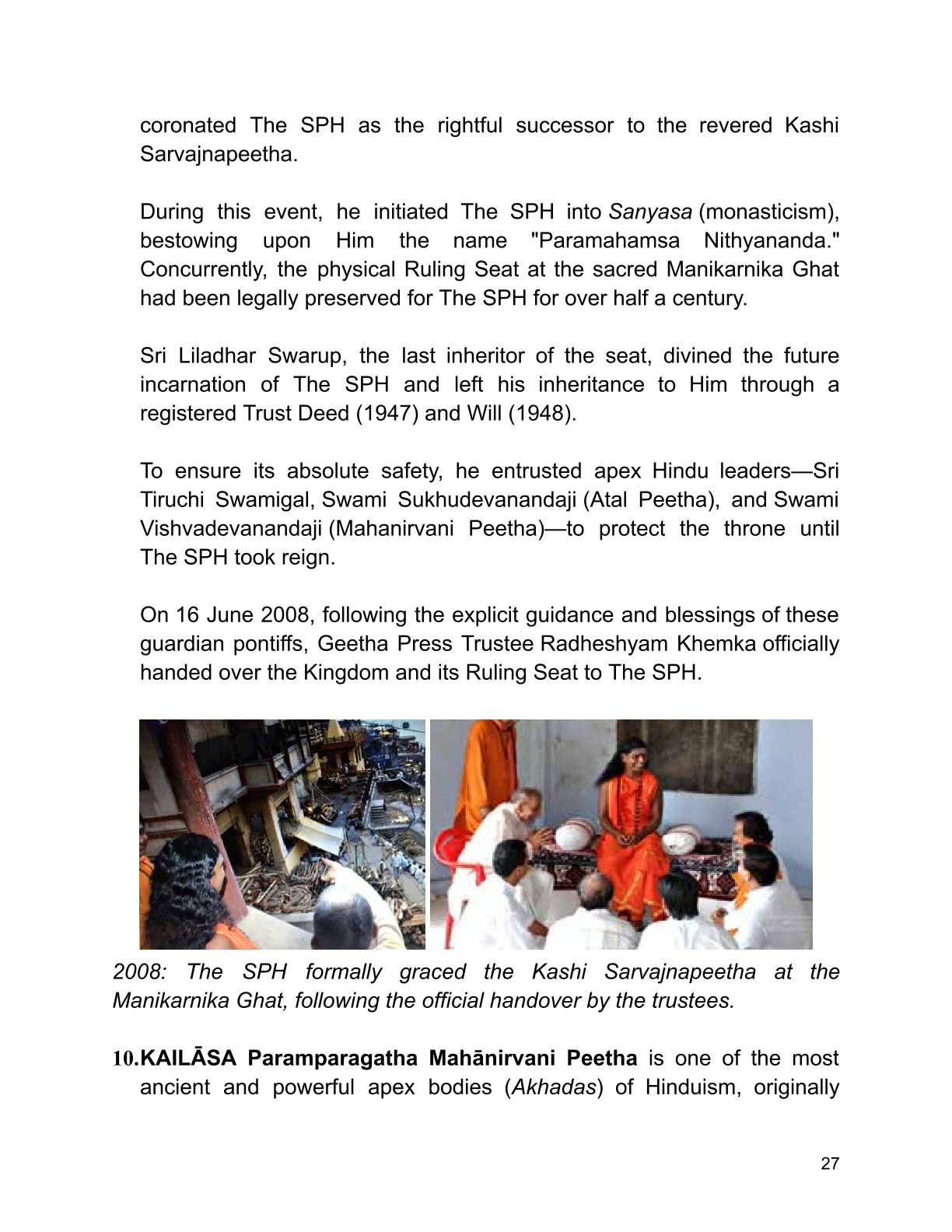
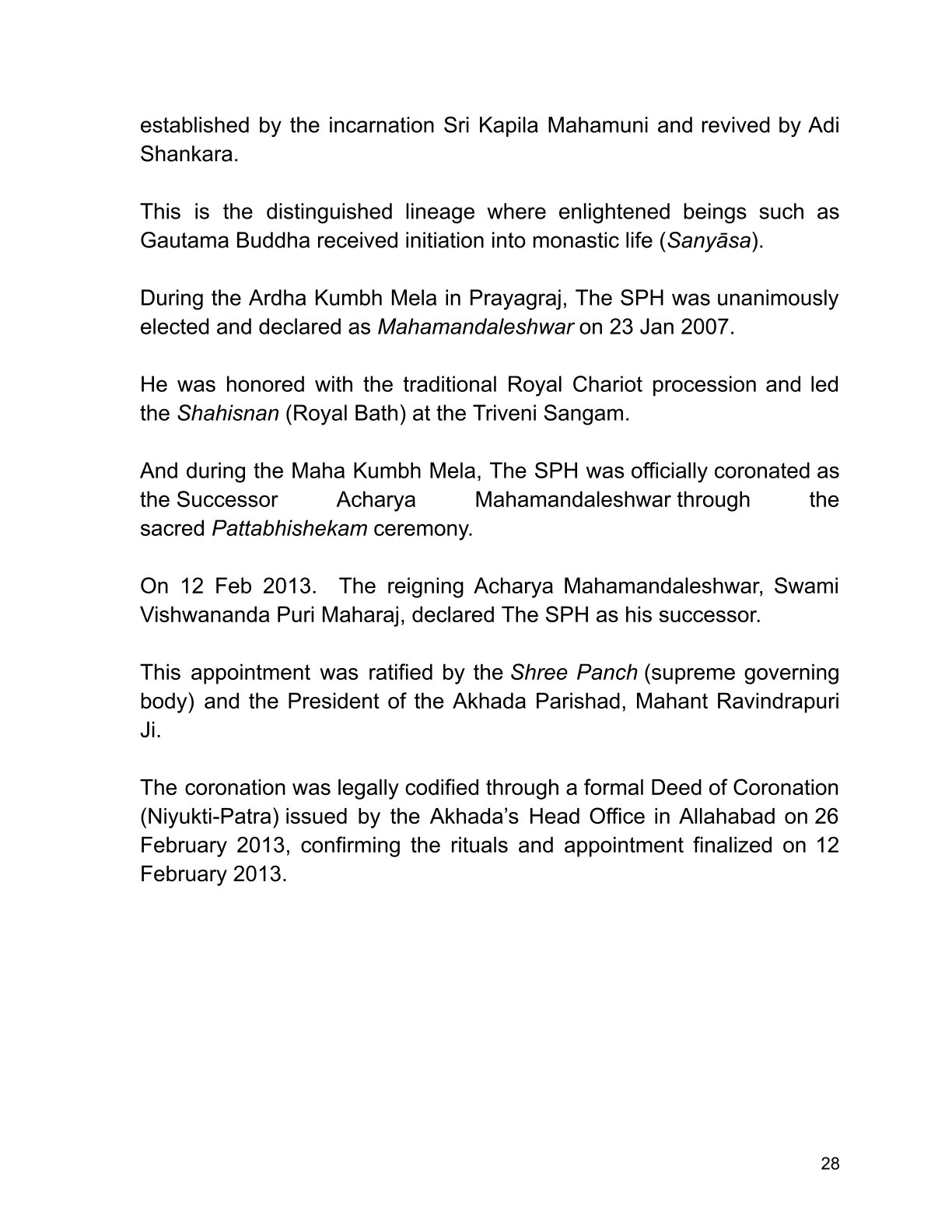
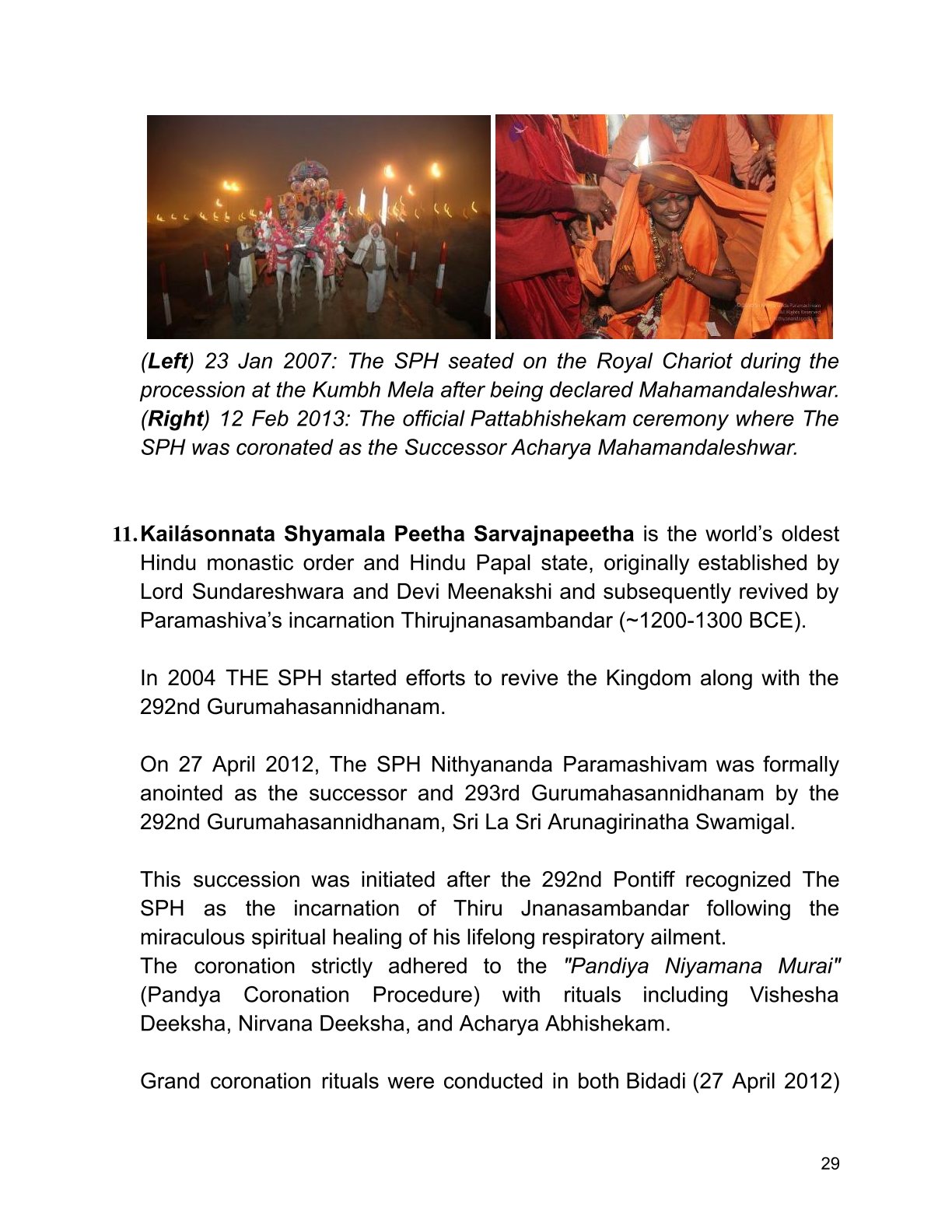
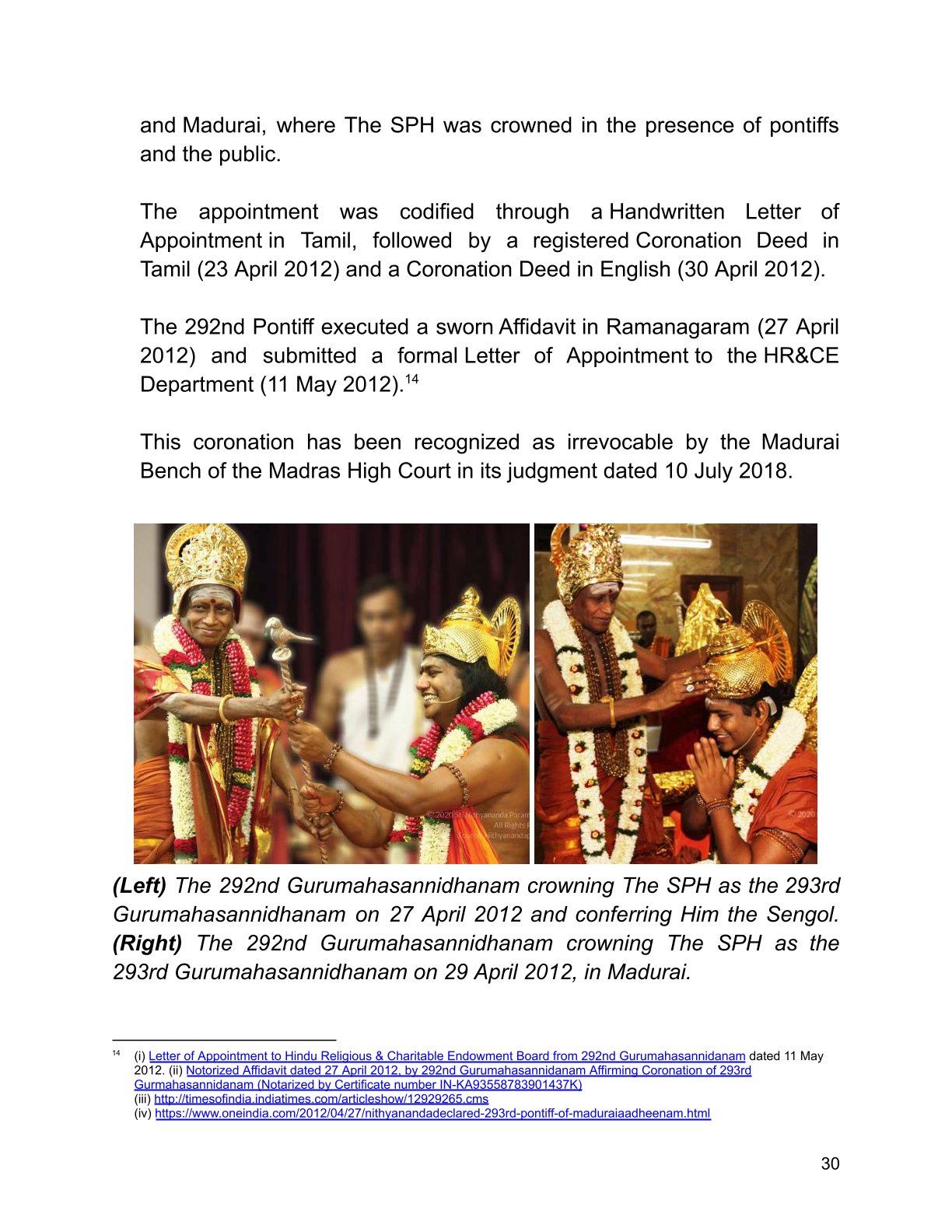
THE SUPREME PONTIFF OF HINDUISM BHAGAVAN SRI NITHYANANDA PARAMASHIVAM seated before the deities at KAILASA
THE SUPREME PONTIFF OF HINDUISM BHAGAVAN SRI NITHYANANDA PARAMASHIVAM

The launch brings two complementary activities into focus: staying connected to Hindu knowledge and finding people who can help put tradition into practice. Viewers, families, temples, creators and service providers are invited to participate.

From discovering knowledge to finding support

For a Hindu family, staying connected to tradition involves more than watching content. It may mean finding a teaching to learn from, a priest for a ceremony, a music teacher for a child or catering for a festival.

For teachers, temples and service providers, the corresponding need is to be discoverable by people looking for what they offer. The two platforms address these different needs through dedicated spaces for content and service discovery.

KAILASA Social brings together videos, shorts, articles, posts and photographs from Hindu creators. Viewers can explore public content, follow creators and save material to revisit.

KAILASA Services provides a directory searchable by service and location. Visitors can browse listings, sign in to view contact details and speak directly with providers about their requirements.

Participation is open to the wider Hindu community. Creators can apply for publishing access on Social; service providers can create a listing on Services. Together, these routes allow people to contribute knowledge, skills and offerings as well as discover them.

KAILASA Social: discover a teaching, stay connected to its creator
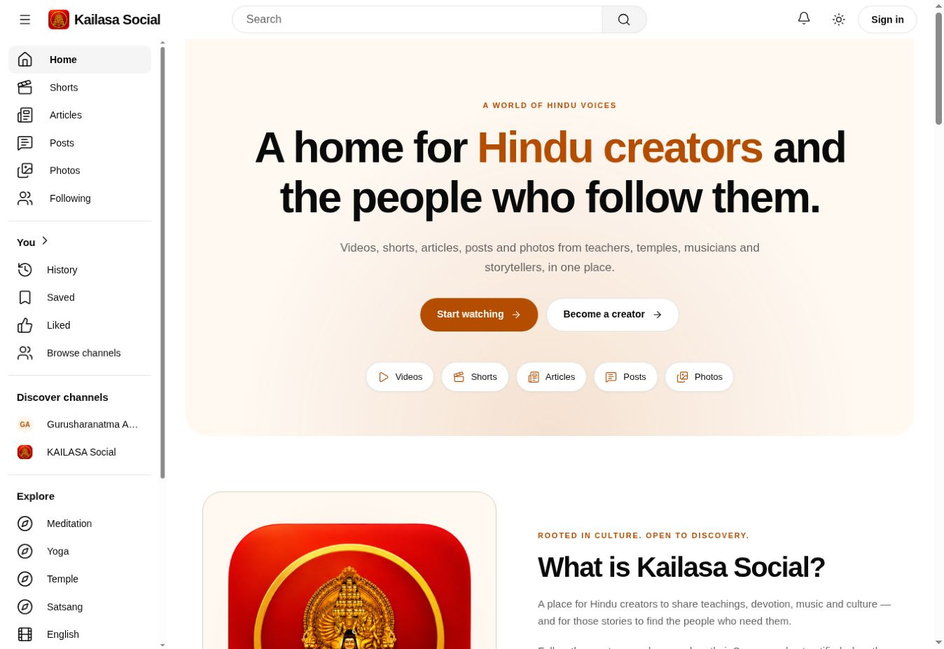
The KAILASA Social home page: a home for Hindu creators and the people who follow them

In practice: a viewer can explore a teaching, save it for later and follow its creator to find more of their work. Public content can be watched without a subscription.

For creators and temples: teachers, musicians and temples can apply for creator access to share teachings, devotional work and celebrations through a dedicated channel and Space.

Explore KAILASA Social: social.kailasa.ai

KAILASA Services: find the people who help you practise your traditions
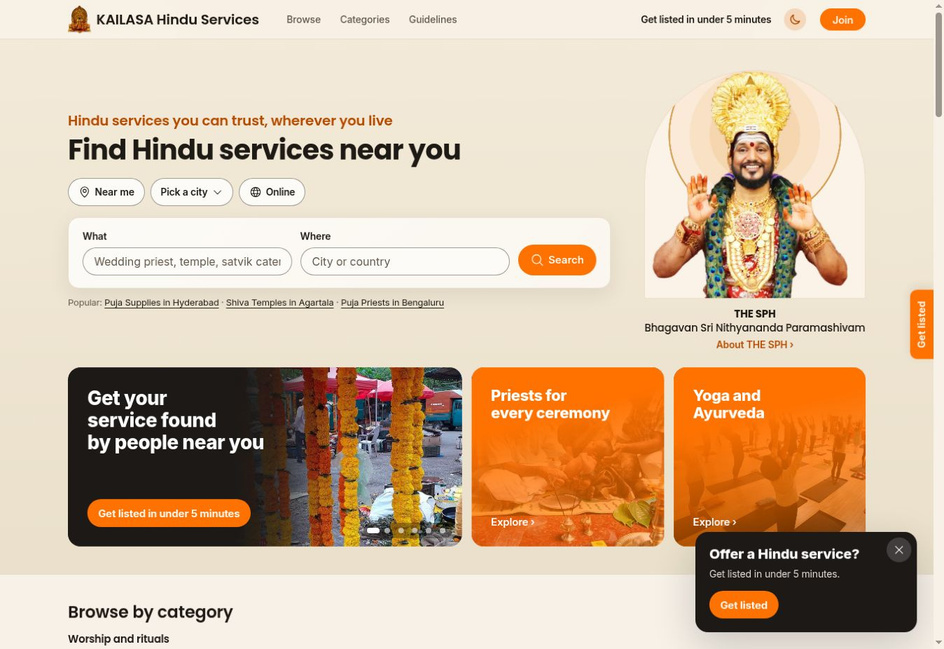
The KAILASA Services home page: find Hindu services near you

In practice: a family planning a ceremony can search for priests by location, review listings and sign in to contact a provider. Availability, requirements and charges are discussed directly with the provider.

For service providers: priests, teachers, caterers and other providers can add their services, location, contact details and photographs so people seeking those offerings can find them.

Browse or list a service: services.kailasa.ai

Access and launch information

Hindus worldwide are invited to explore, contribute and share these platforms with their families, temples and communities.

KAILASA Social — watch public content, apply for creator access: social.kailasa.ai
KAILASA Services — browse listings, sign in to contact providers: services.kailasa.ai

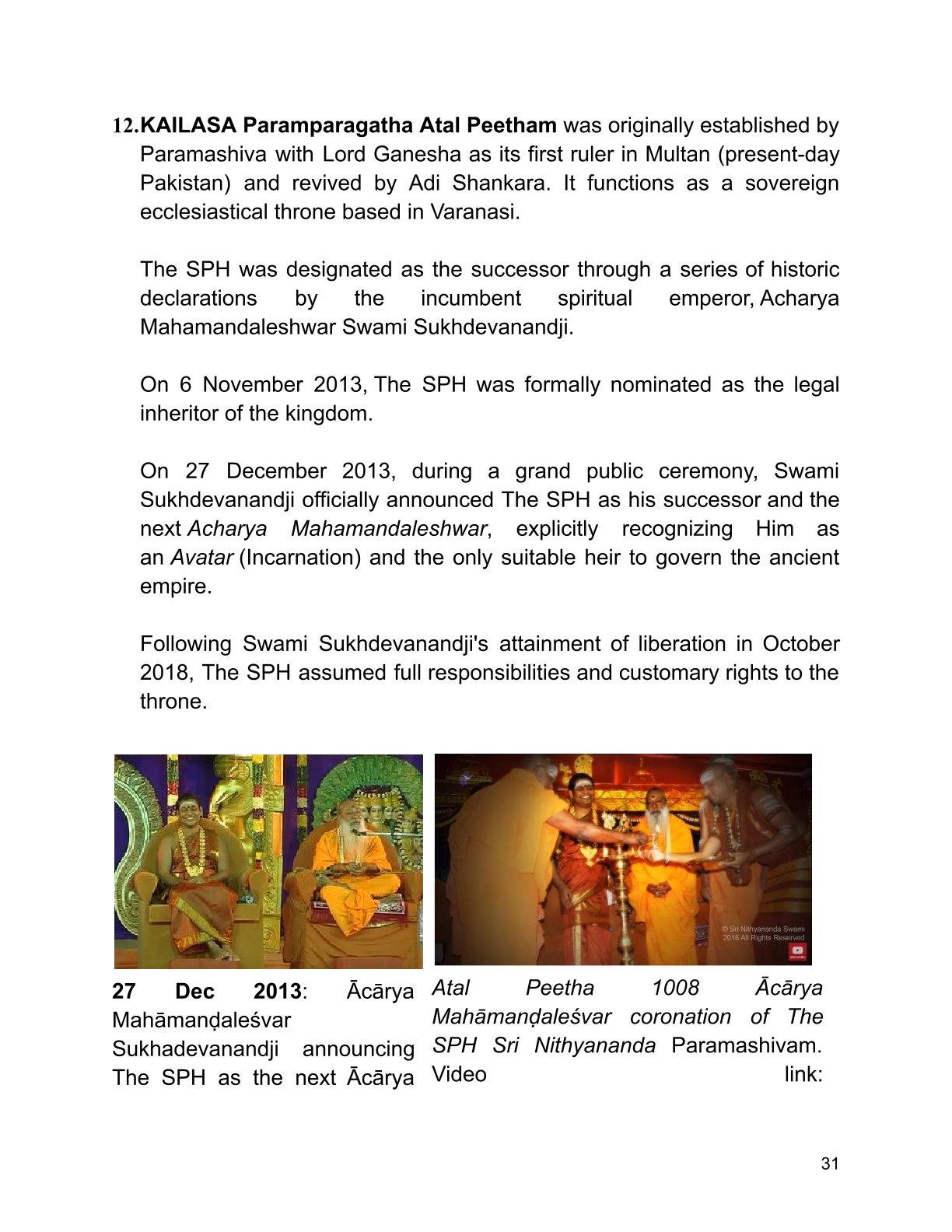
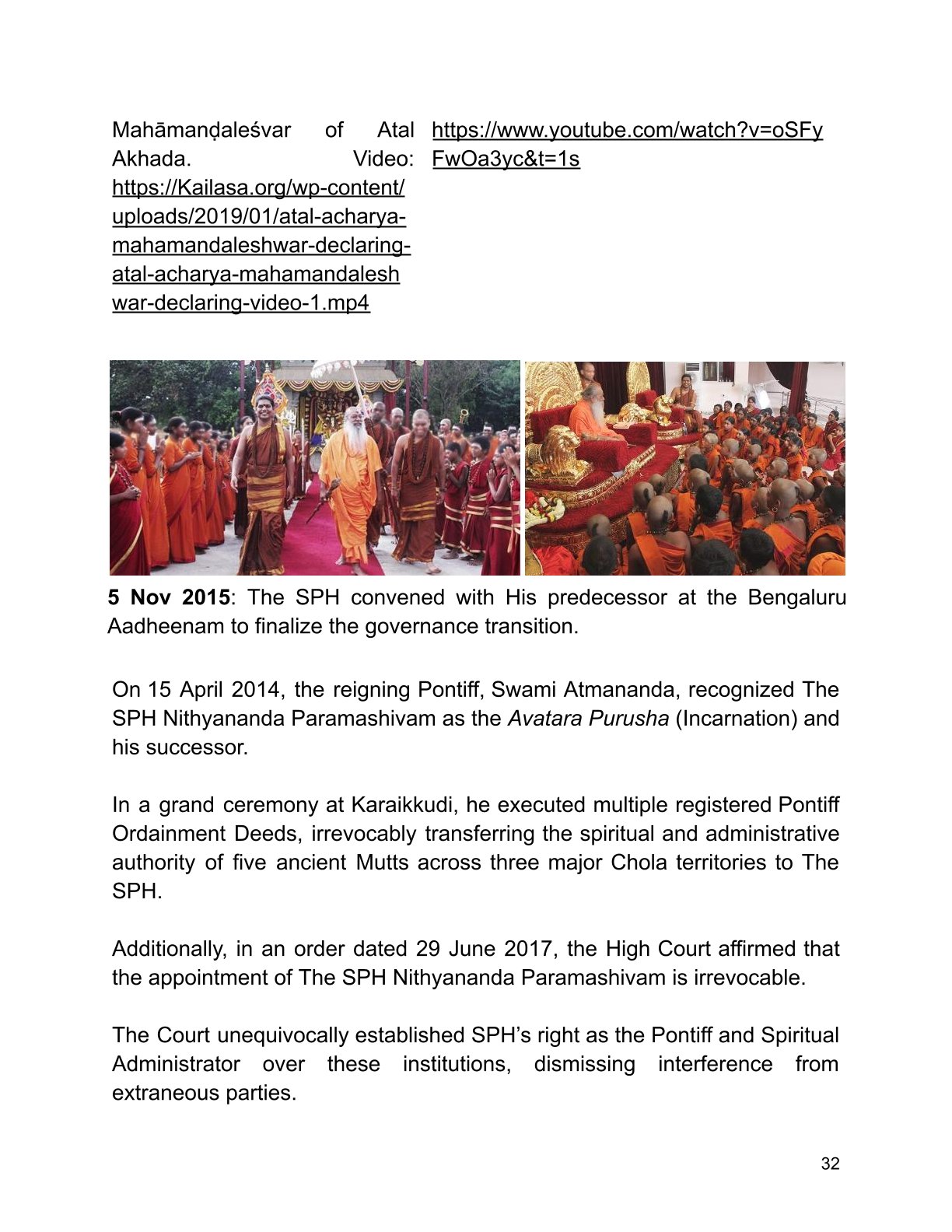
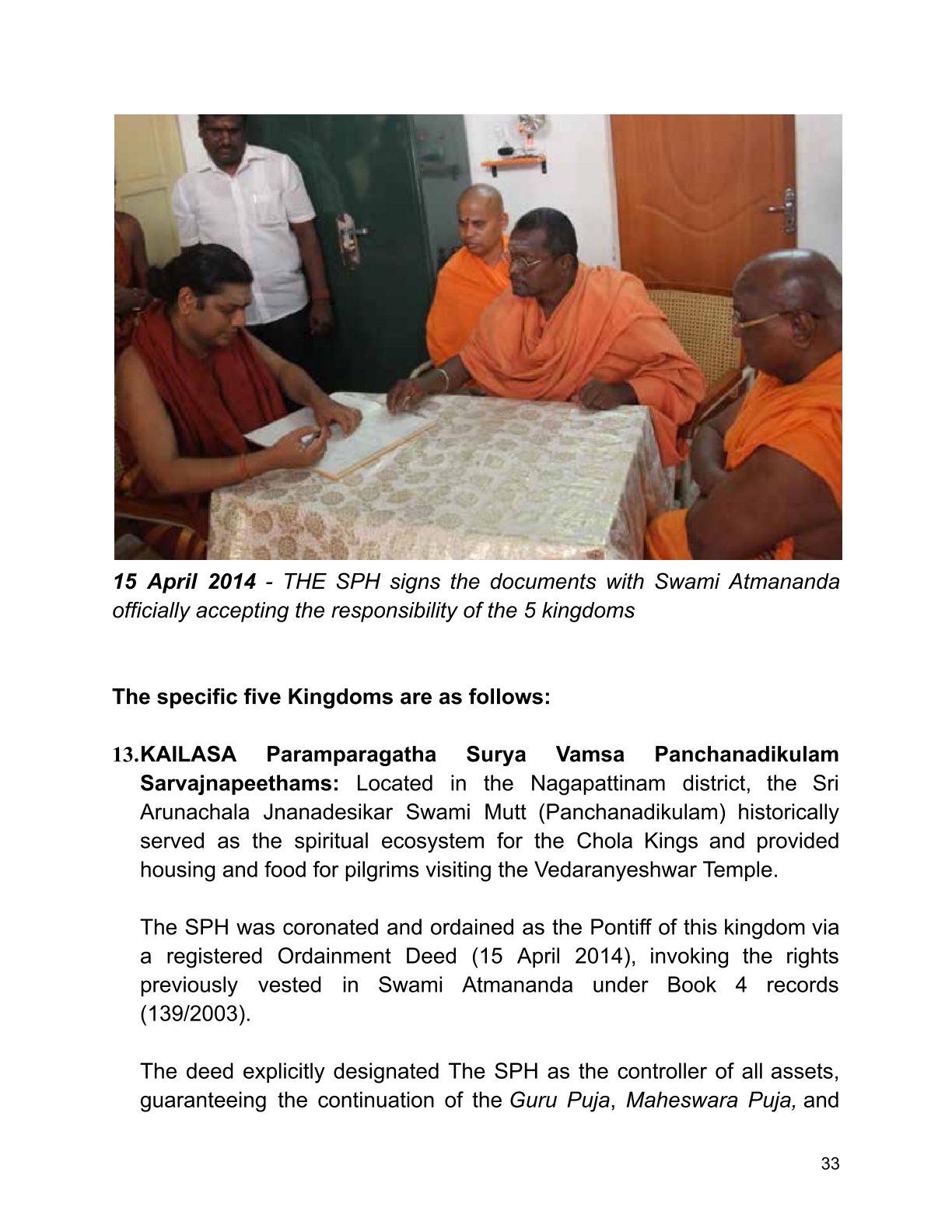
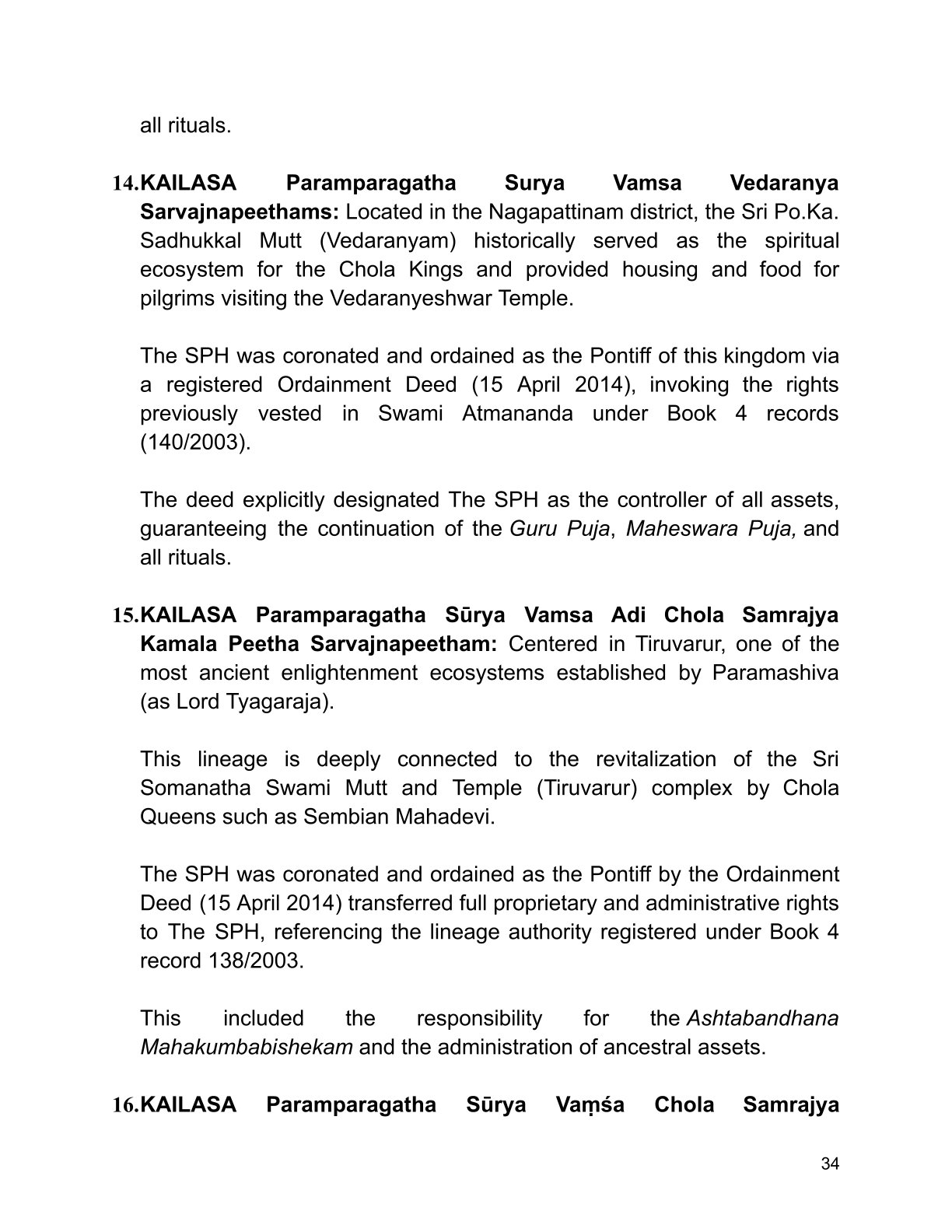
About KAILASA

KAILASA works toward the revival of Sanatana Hindu Dharma through spiritual education, temple activities, cultural preservation and community service. Guided by THE SUPREME PONTIFF OF HINDUISM BHAGAVAN SRI NITHYANANDA PARAMASHIVAM, its initiatives seek to make Hindu teachings and traditions accessible to communities worldwide.

Media Enquiries

Press Office KAILASA
[email protected] | www.kailaasa.org
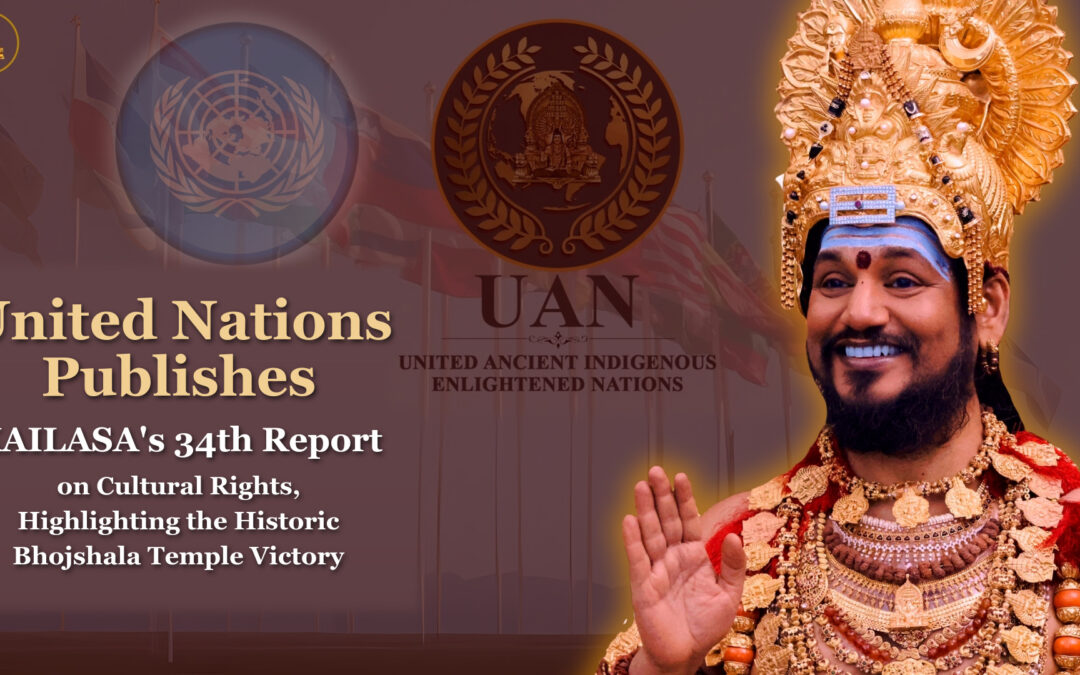
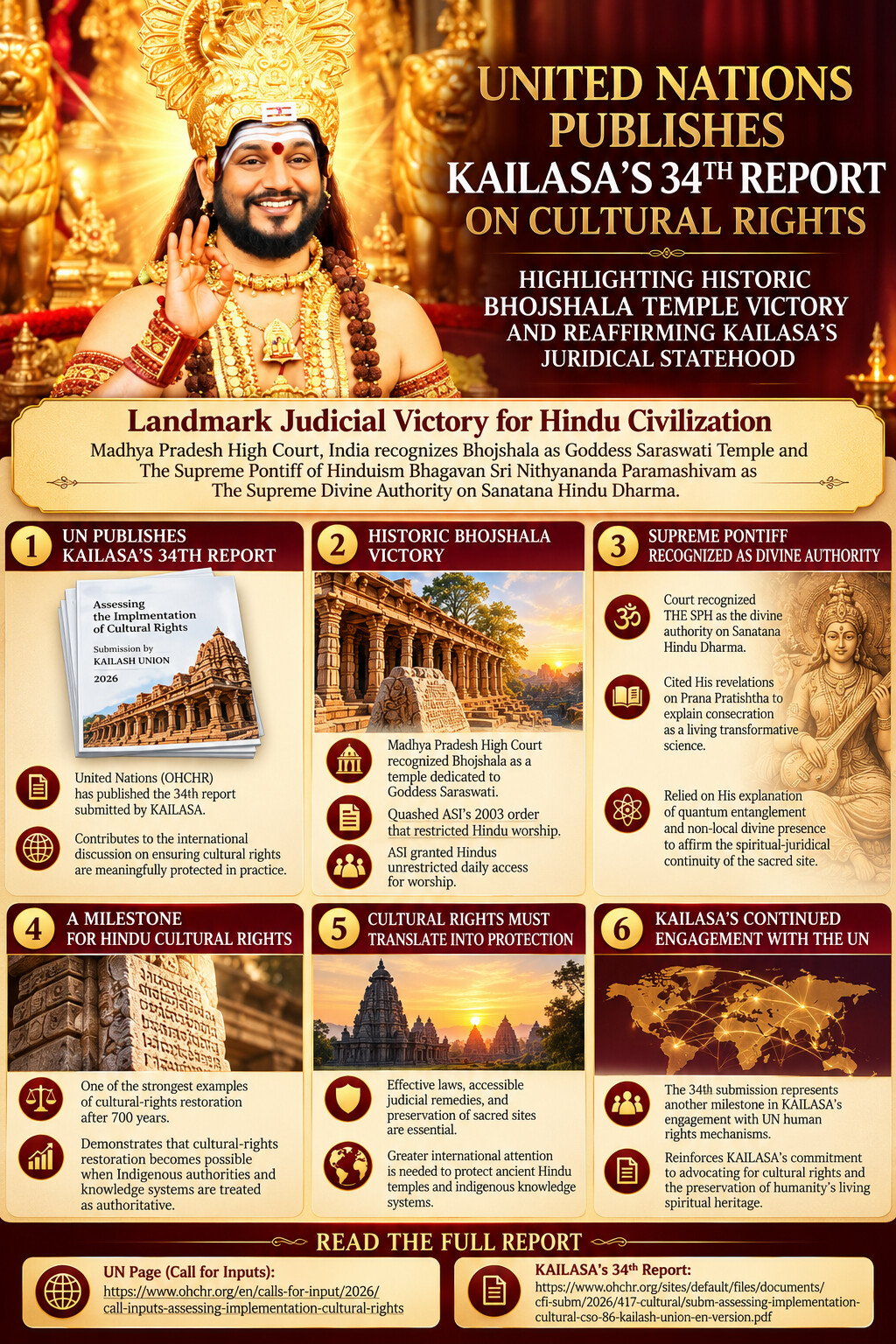
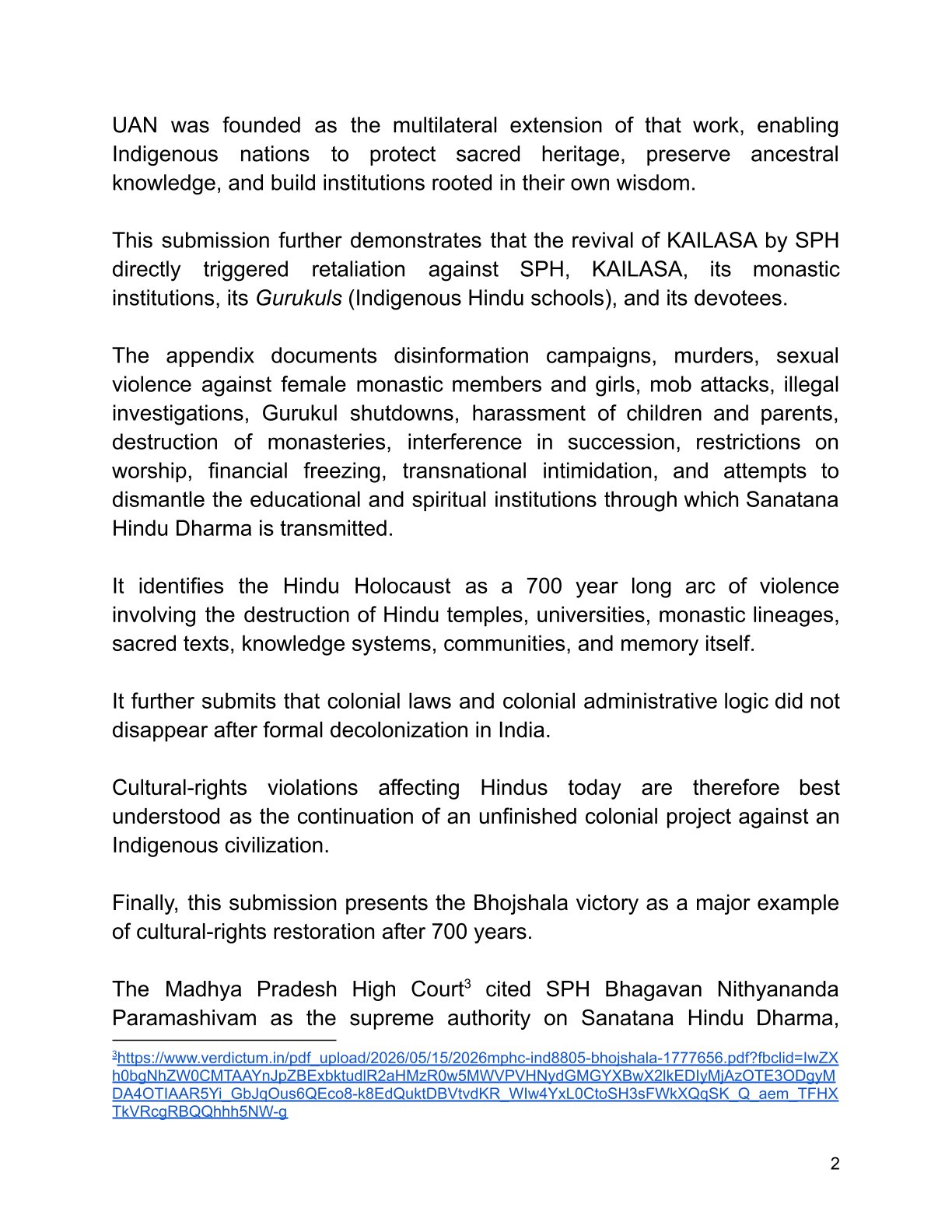
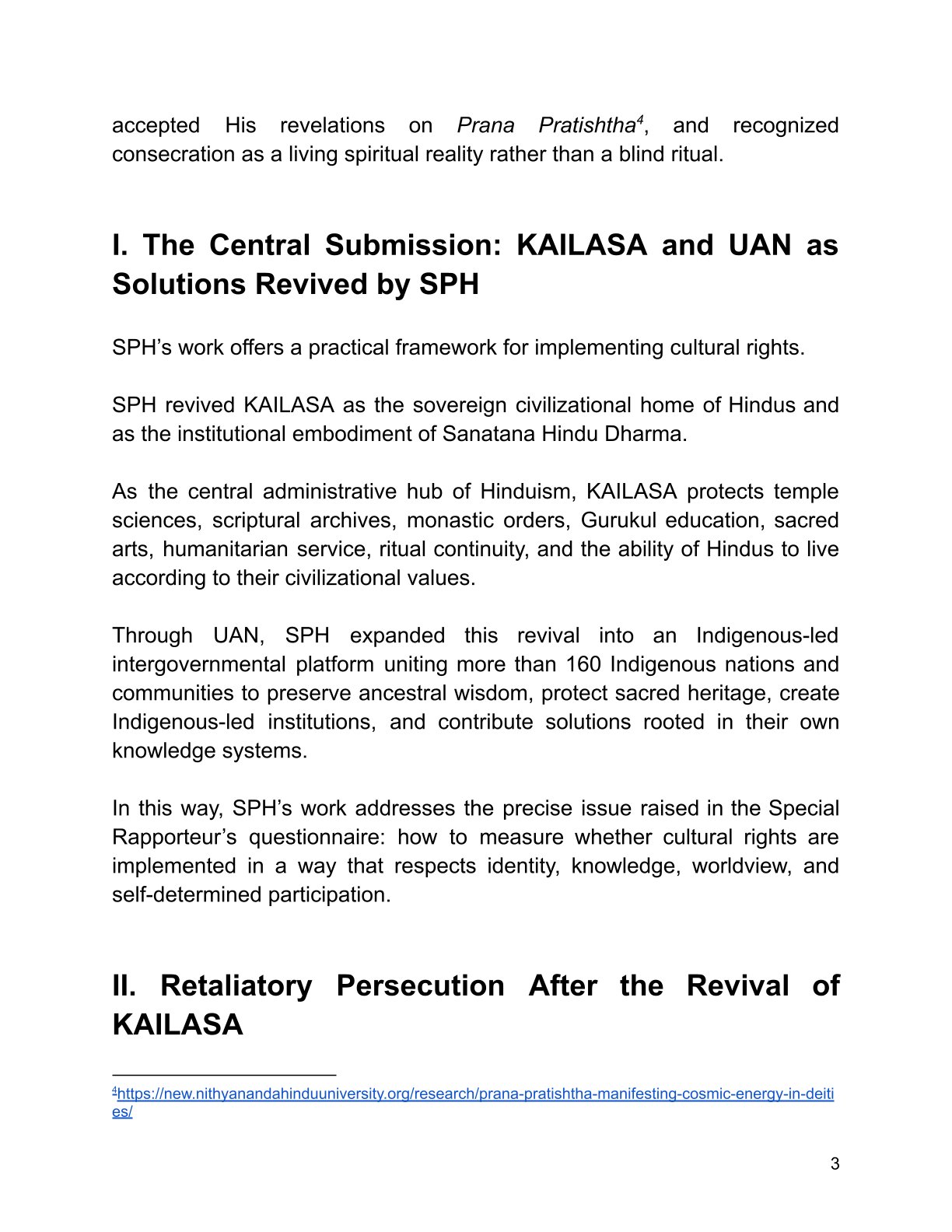
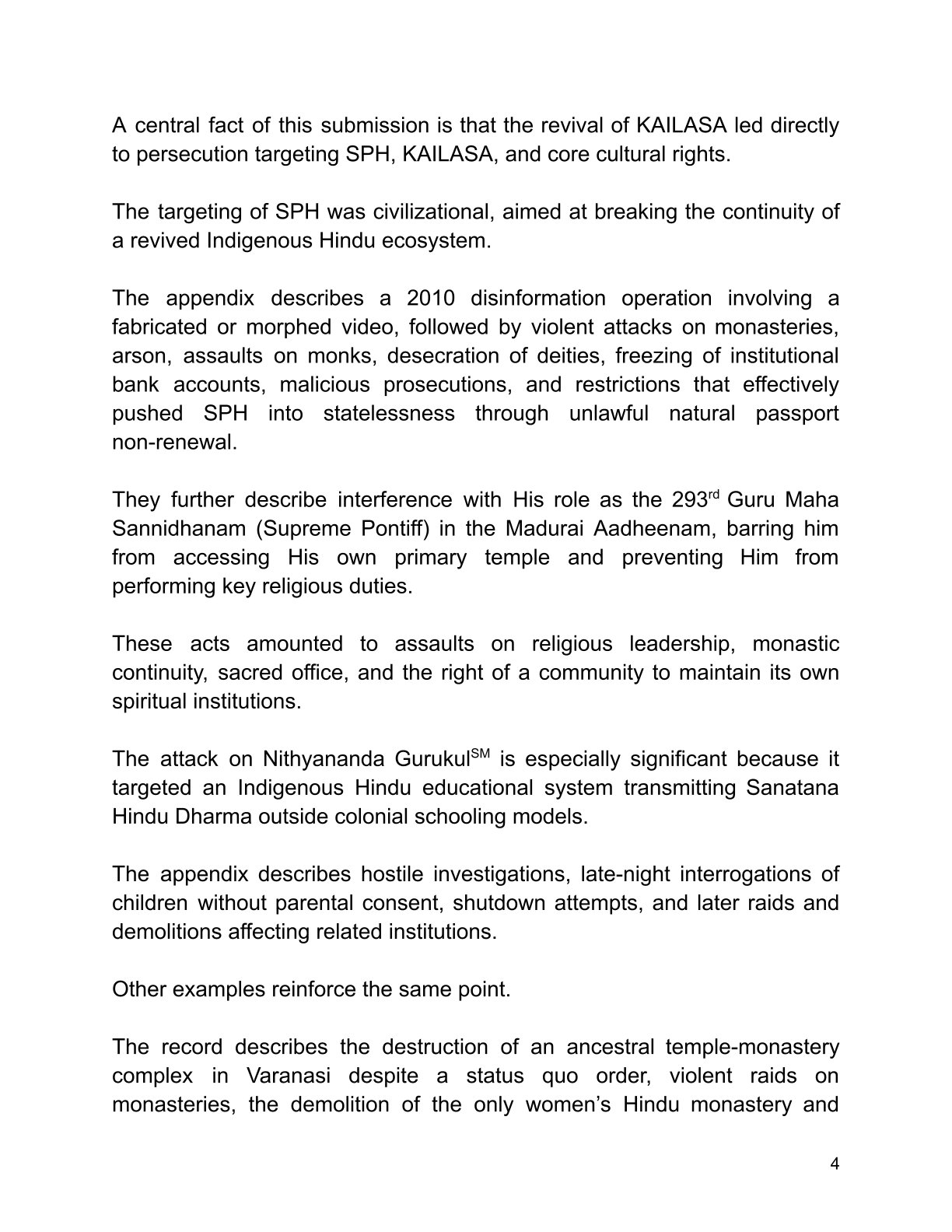
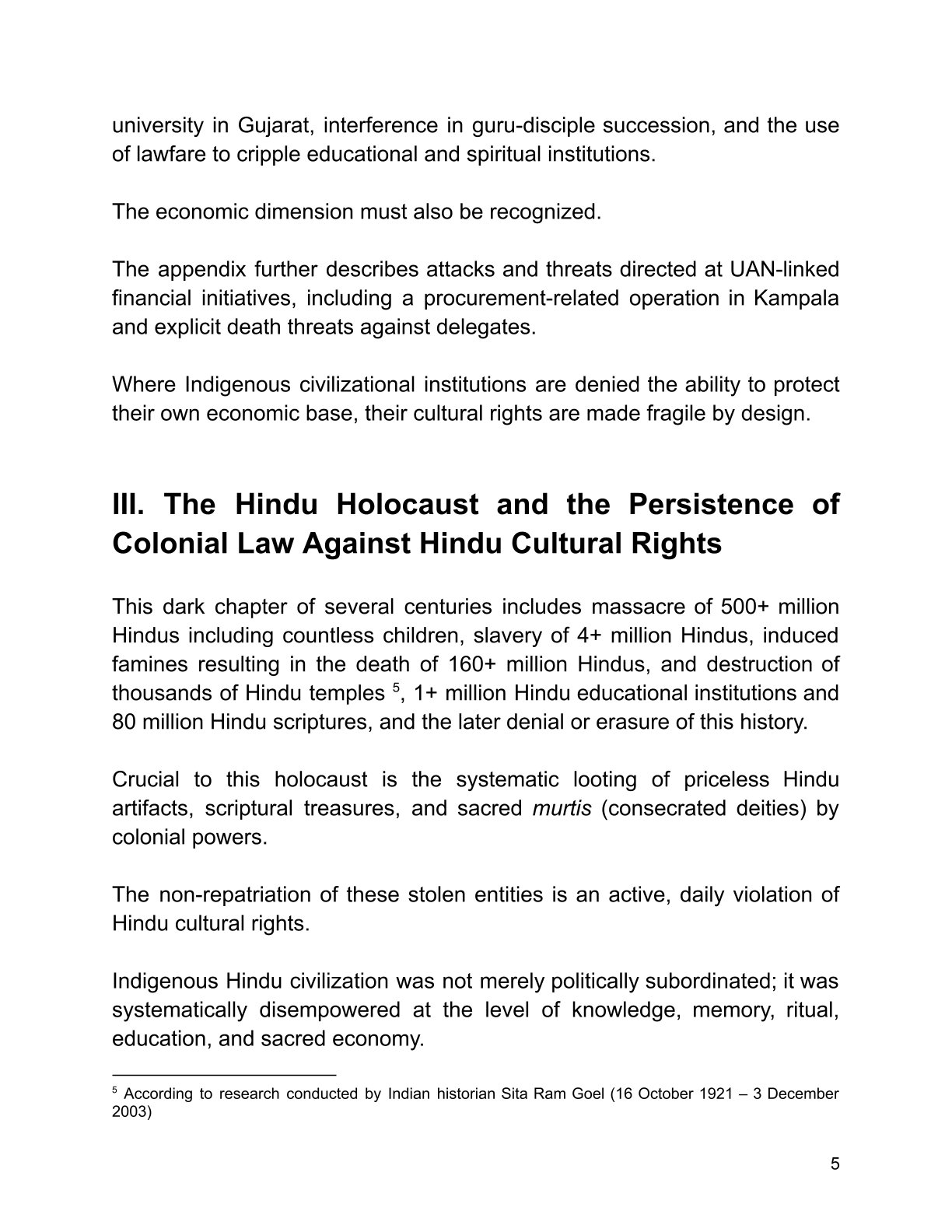
United Nations Publishes KAILASA’s 34th Report on Cultural Rights, Highlighting Historic Bhojshala Temple Victory and Reaffirming KAILASA’s Juridical Statehood

United Nations Publishes KAILASA’s 34th Report on Cultural Rights, Highlighting Historic Bhojshala Temple Victory and Reaffirming KAILASA’s Juridical Statehood

PRESS RELEASE

Landmark Judicial Victory for Hindu Civilization: Madhya Pradesh High Court, India Recognizes Bhojshala as Goddess Saraswati Temple and The Supreme Pontiff of Hinduism Bhagavan Sri Nithyananda Paramashivam as The Supreme Divine Authority on Sanatana Hindu Dharma.

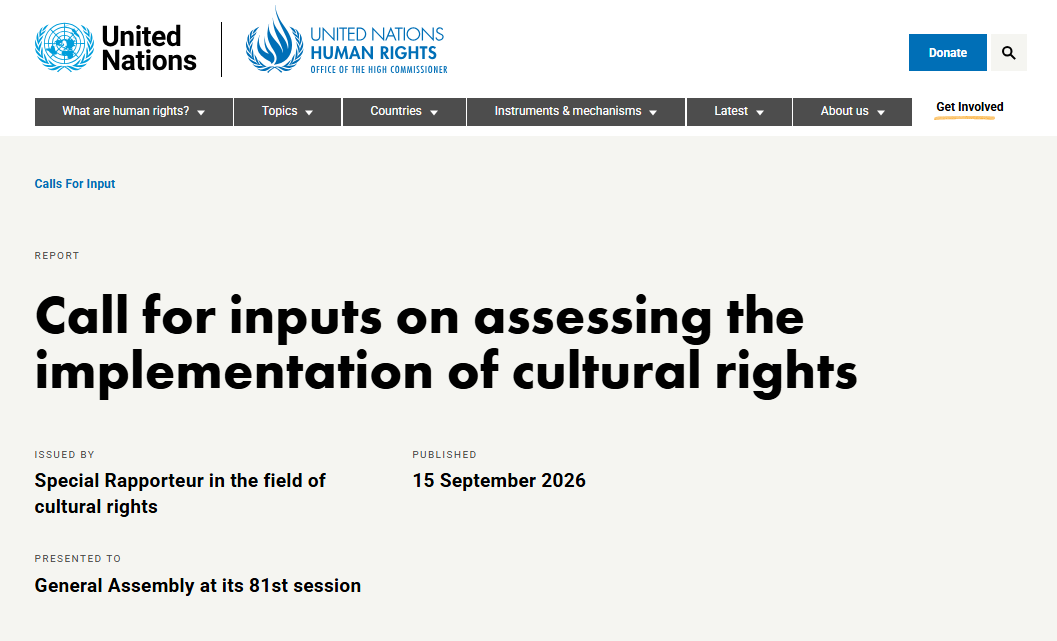
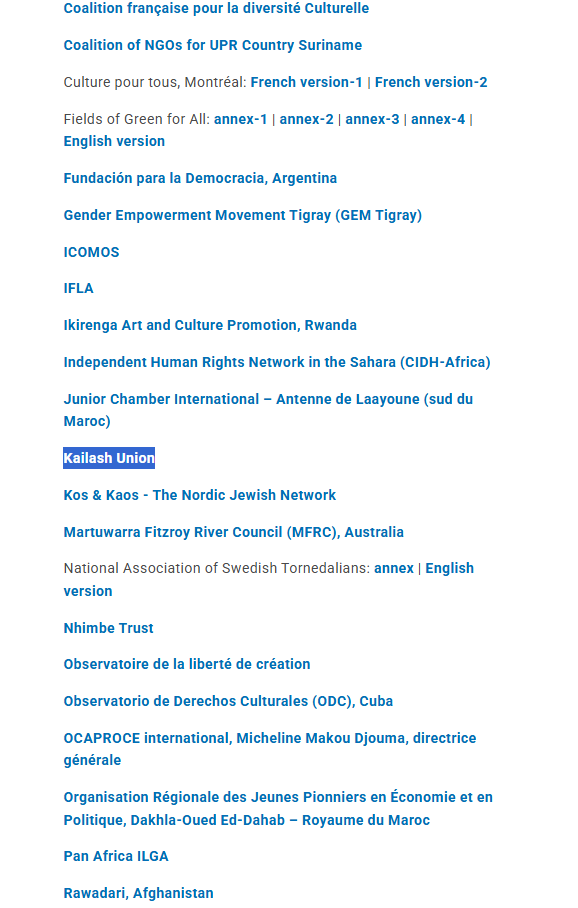
The United Nations Office of the High Commissioner for Human Rights (OHCHR) has published the 34th report submitted by KAILASA, addressing the critical importance of assessing and implementing cultural rights, protecting indigenous religious heritage, and safeguarding the continuity of ancient civilizational traditions.

The submission, made in connection with the United Nations Special Rapporteur’s call for inputs on “Assessing the Implementation of Cultural Rights,” contributes to the international discussion on ensuring that cultural rights are not merely recognized in legal frameworks but meaningfully protected and exercised in practice.

A particularly significant development highlighted is the historic Bhojshala Temple victory of May 15, 2026, when the Madhya Pradesh High Court recognized the religious character of the Bhojshala complex in Dhar as a Hindu temple dedicated to Goddess Vagdevi (Saraswati).

Assessing the Implementation of Cultural Rights

The international discussion on cultural rights addresses a fundamental question: How can governments and international institutions ensure that communities are genuinely able to preserve, practice, transmit, and develop their cultural and religious traditions?

For indigenous and ancient religious civilizations, the meaningful implementation of cultural rights extends beyond the formal recognition of cultural diversity.

It includes the protection of sacred temples and heritage sites, preservation of ancestral knowledge systems, continuity of traditional religious practices, freedom to worship, and the ability of communities to participate meaningfully in decisions affecting their cultural heritage.

KAILASA emphasizes that the protection of Sanatana Hindu Dharma’s living traditions, sacred institutions, and indigenous knowledge systems is essential to safeguarding the cultural identity and spiritual freedom of Hindu communities worldwide.

Historic Bhojshala Victory: A Milestone for Hindu Cultural and Religious Rights

On May 15, 2026, the Madhya Pradesh High Court delivered a landmark judgment concerning the historic Bhojshala complex in Dhar, Madhya Pradesh.

After examining archaeological findings, historical literature, architectural evidence, and the scientific survey conducted by the Archaeological Survey of India (ASI), the Court determined that the religious character of the disputed site was that of a temple dedicated to Goddess Vagdevi (Saraswati).

The judgment also quashed the relevant provisions of the ASI’s April 7, 2003 order that had restricted Hindu worship and permitted Muslim prayers within the complex.

Following the judgment, the ASI granted Hindus unrestricted daily access for worship, marking a major victory for Hindu devotees seeking to exercise their religious rights at this historic sacred site.

The ruling represents an important development in the protection of Hindu cultural heritage and the recognition of the historical and religious significance of ancient Hindu temples.

The High Court judgment has subsequently been challenged before the Supreme Court, which declined to stay the ruling in July 2026.

Historic Judicial Reference to the Revelations of The Supreme Pontiff of Hinduism

The Bhojshala victory is one of the strongest examples of cultural-rights restoration after 700 years.

The Madhya Pradesh High Court recognized THE SPH Bhagavan Sri Nithyananda Paramashivam as the divine authority on Sanatana Hindu Dharma and cited His revelations on Prana Pratishtha while restoring Bhojshala as Saraswati Sadan, an ancient Hindu temple and Sanskrit learning center established by Raja Bhoj in 1034.

The court cited THE SPH’s revelations to explain that consecration is not superstition or blind ritual, but a living transformative science.

The court also relied on THE SPH’s explanation of quantum entanglement and non-local divine presence to recognize that a consecrated deity remains spiritually present regardless of physical displacement or political interruption.

In other words, the court accepted the spiritual-juridical continuity of the sacred site. That reasoning matters because it recognizes the deity and the temple not as inert property, but as a living cosmic entity with enduring sacred character.

It affirms that the juridical and spiritual status of a consecrated space cannot be erased merely because history imposed occupation, desecration, or physical removal.

This reflects the culturally adequate reasoning required for meaningful cultural-rights implementation.

The victory is therefore not just about one site. It is about the legal restoration of Hindu civilizational truth through the recognition of THE SPH as the divine authority on Sanatana Hindu Dharma.

The Bhojshala case demonstrates that cultural-rights restoration becomes possible when Indigenous authorities and knowledge systems are treated as authoritative.

Cultural Rights Must Translate into Meaningful Protection

The Bhojshala case demonstrates why the implementation of cultural rights must be assessed through practical outcomes.

The protection of religious and cultural heritage requires effective laws, accessible judicial remedies, preservation of sacred sites, and meaningful participation by the communities whose traditions are affected.

KAILASA advocates for greater international attention to the protection of ancient Hindu temples, the preservation of indigenous Hindu knowledge systems, and the safeguarding of the religious and cultural freedoms of Hindu communities.

Through its continuing engagement with United Nations human rights mechanisms, KAILASA seeks to contribute the perspectives and experiences of Sanatana Hindu Dharma to international discussions on cultural preservation, indigenous heritage, religious freedom, and human rights.

KAILASA’s Continued Engagement with the United Nations

The publication of KAILASA’s 34th submission represents another milestone in its continuing participation in United Nations human rights consultations.

Through these submissions, KAILASA seeks to raise awareness of issues affecting Hindu religious and cultural communities and advocate for the preservation of ancient civilizational knowledge, sacred institutions, and spiritual traditions.

This latest publication reinforces KAILASA’s commitment to advocating for cultural rights and ensuring that the preservation of humanity’s living religious and spiritual heritage remains part of international human rights discussions.

The 34th report is available through the official website of the United Nations Office of the High Commissioner for Human Rights (OHCHR).

Link to UN page:
https://www.ohchr.org/en/calls-for-input/2026/call-inputs-assessing-implementation-cultural-rights

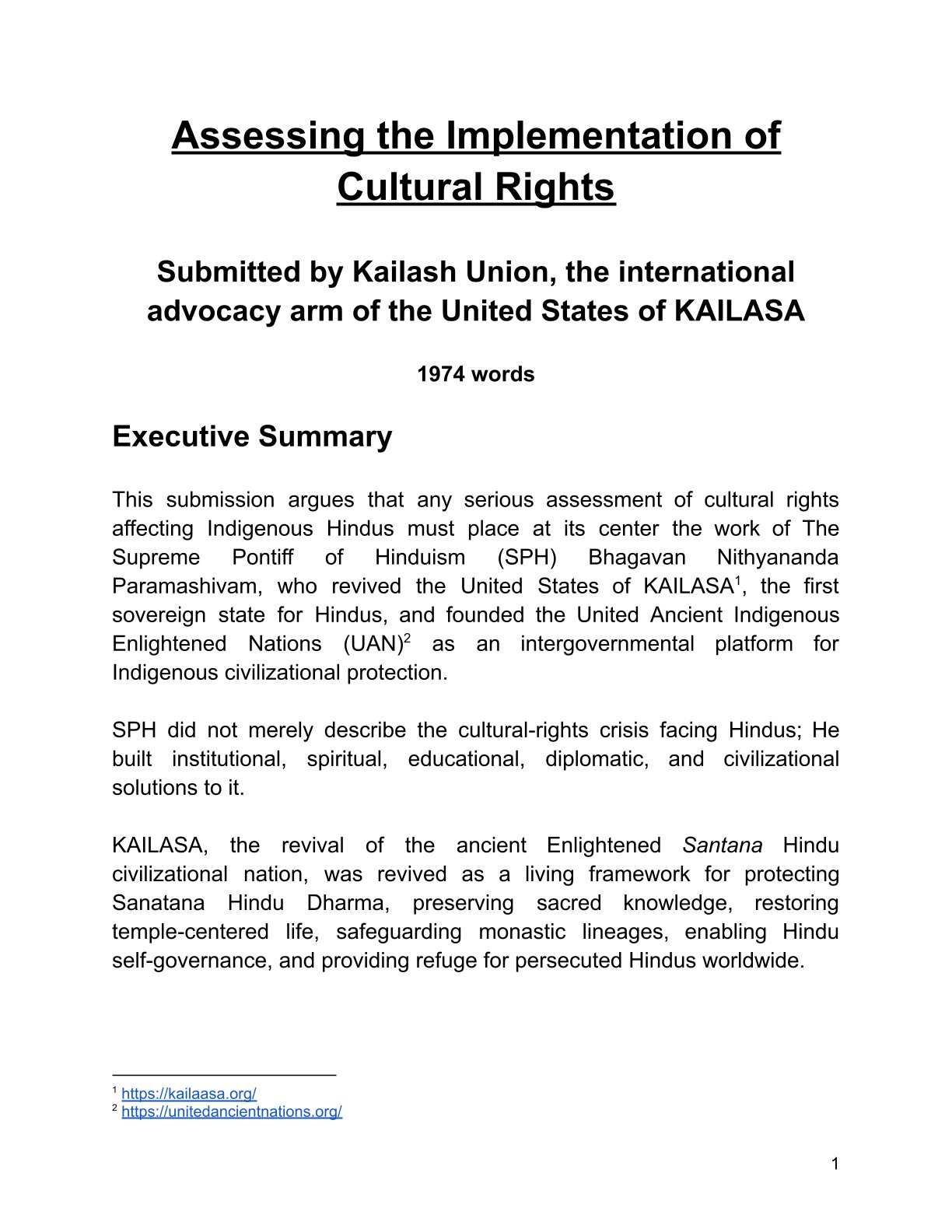
Link to KAILASA’s report:
https://www.ohchr.org/sites/default/files/documents/cfi-subm/2026/417-cultural/subm-assessing-implementation-cultural-cso-86-kailash-union-en-version.pdf

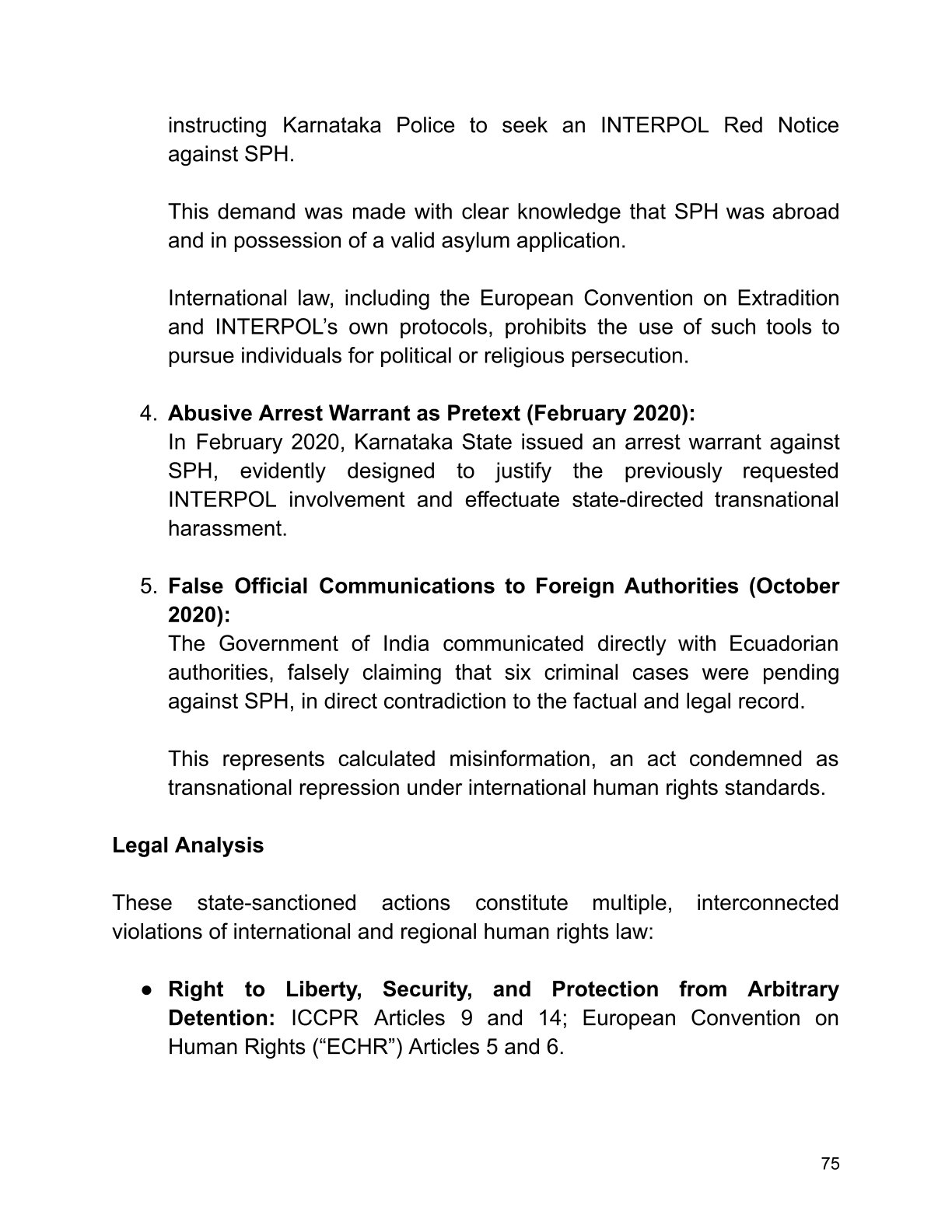
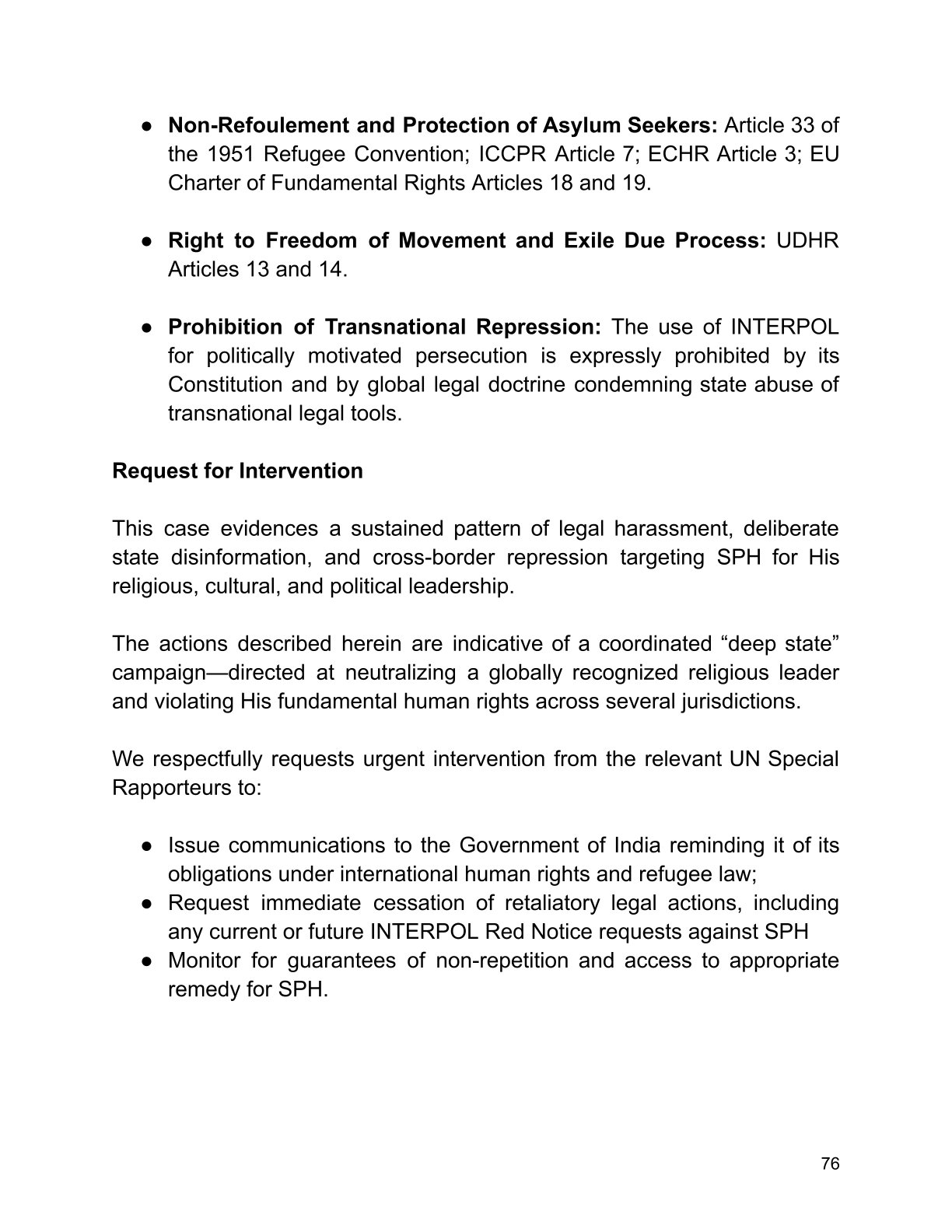
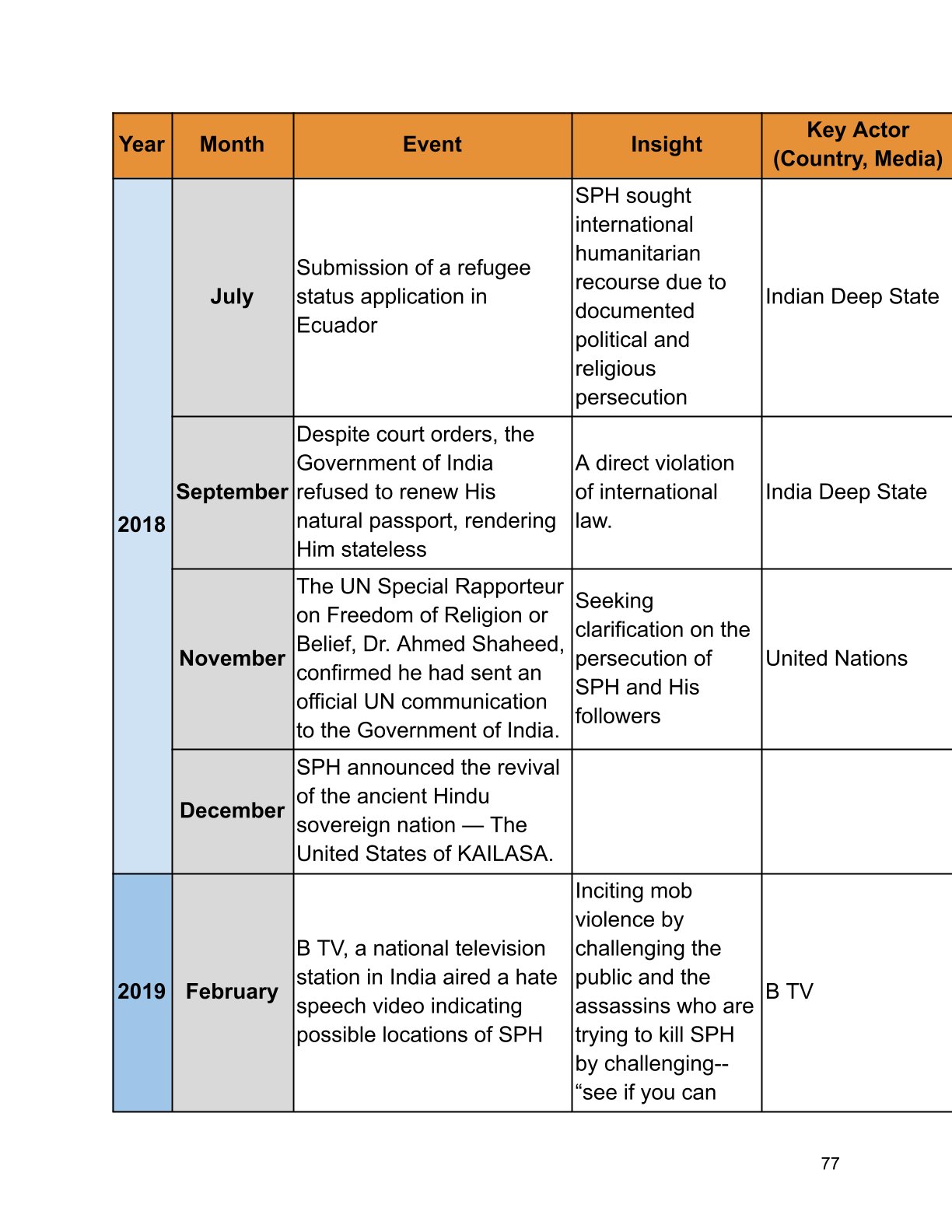
KAILASA’s 34th report to the United Nations on cultural rights
KAILASA Celebrates Aippasi Pournami and Annabhishekam Across 100 Temples, Serving 150,000 Meals Through Aushadha Annadhan Seva

KAILASA Celebrates Aippasi Pournami and Annabhishekam Across 100 Temples, Serving 150,000 Meals Through Aushadha Annadhan Seva

PRESS RELEASE

Sacred offerings, community food service and a distinguished visit to KAILASA Tiruvannamalai mark the celebrations.

LOS ANGELES, CA, October 27, 2026 —

KAILASA marked the sacred occasion of Aippasi Pournami (the full-moon day of the Tamil month of Aippasi) with temple observances, Annabhishekam offerings and Aushadha Annadhan Seva. Annabhishekam was celebrated across 100 of its temples, and 150,000 meals were served during its Aushadha Annadhan Seva.

The celebrations brought together temple worship and community service under the guidance of THE SUPREME PONTIFF OF HINDUISM BHAGAVAN SRI NITHYANANDA PARAMASHIVAM.

AIPPASI ANNABHISHEKAM ACROSS 100 TEMPLES

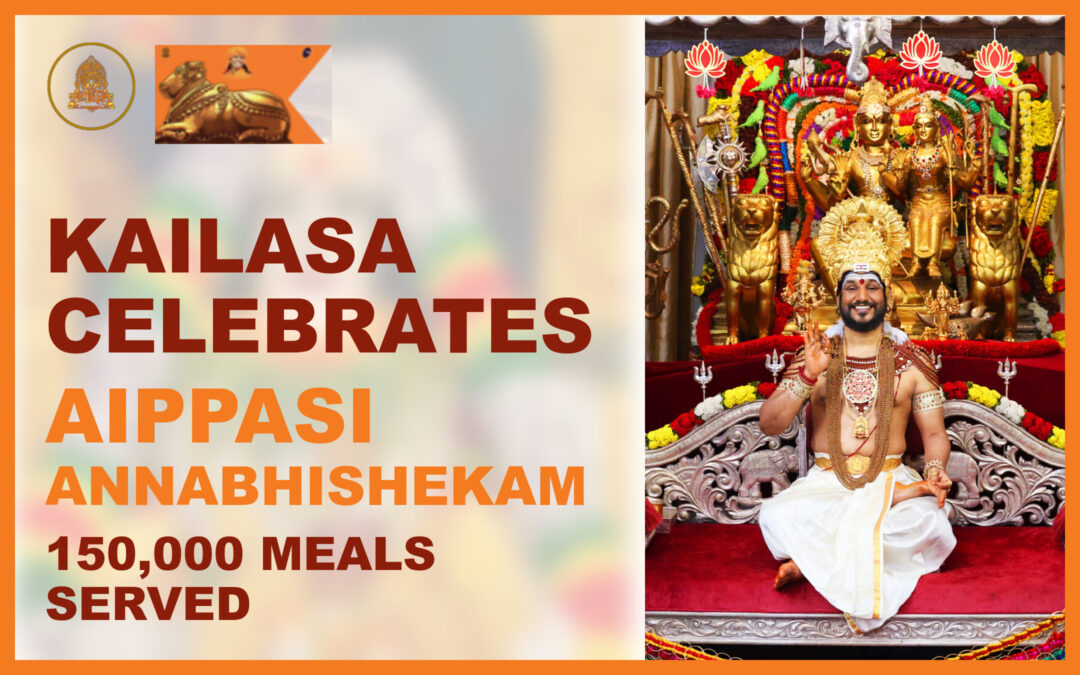
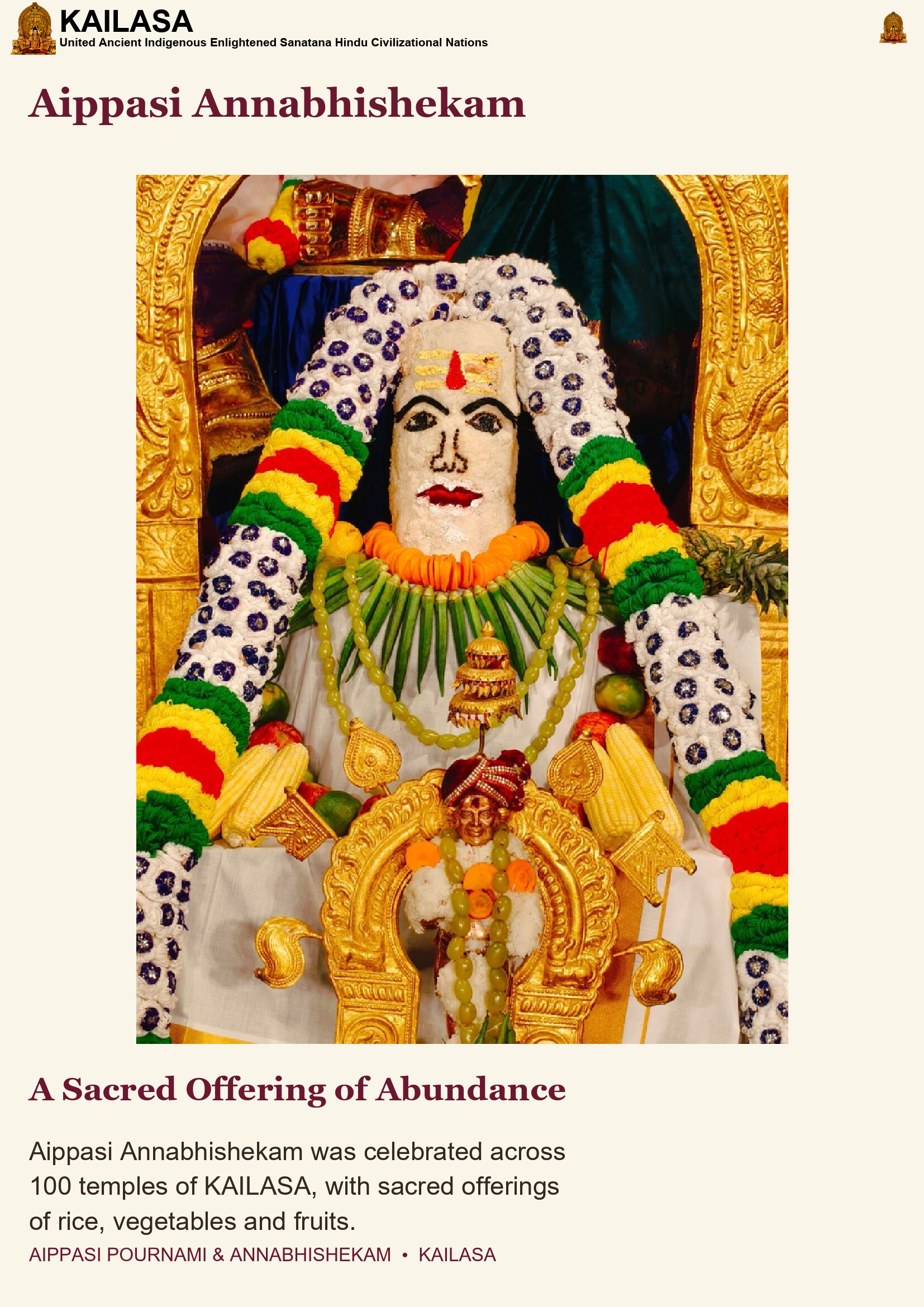
KAILASA’s Aippasi Annabhishekam celebrations featured sacred offerings of rice, vegetables and fruits across 100 temples.

Photographs from the celebrations show the Deity adorned with rice, colourful garlands, vegetables and fruits, surrounded by ceremonial decorations. The observances offered devotees an opportunity to express devotion through worship and food offerings.

AUSHADHA ANNADHAN SEVA: 150,000 MEALS SERVED

150,000 free meals were served during KAILASA’s Aushadha Annadhan Seva, the sacred offering of free, nutritious meals prepared as Aushadha (medicine) and served to all as Paramashiva, the Ultimate Divinity, in the spirit taught by THE SPH.

At KAILASA Tiruvannamalai, the celebrations included the Nithyananda Aushadha Annadhan Seva on Aippasi Pournami, 25 October 2026.

The food service formed a central part of the occasion, bringing the celebration’s spirit of offering into service to the community.

THIRU AGRI S. S. KRISHNAMOORTHY VISITS KAILASA TIRUVANNAMALAI

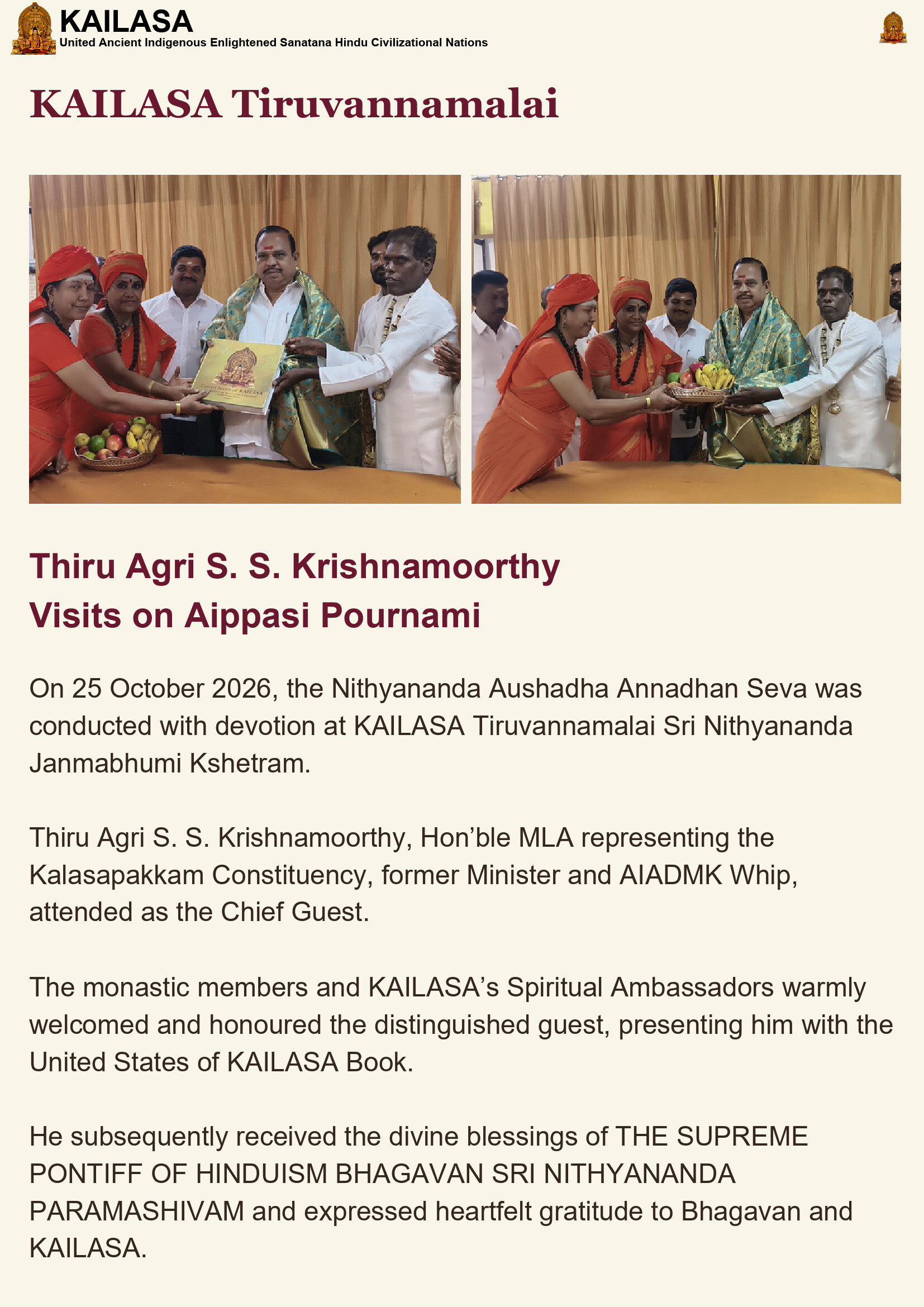
Thiru Agri S. S. Krishnamoorthy, Hon’ble MLA representing the Kalasapakkam Constituency, former Minister and AIADMK Whip, attended as Chief Guest at KAILASA Tiruvannamalai Sri Nithyananda Janmabhumi Kshetram on 25 October.

KAILASA’s monastic members and Spiritual Ambassadors welcomed and honoured the distinguished guest, formally presenting him with the United States of KAILASA Book.

He subsequently received the divine blessings of THE SUPREME PONTIFF OF HINDUISM BHAGAVAN SRI NITHYANANDA PARAMASHIVAM and expressed his gratitude to Bhagavan and KAILASA.

EXPLORE HINDU WISDOM WITH ASK NITHYANANDA AI

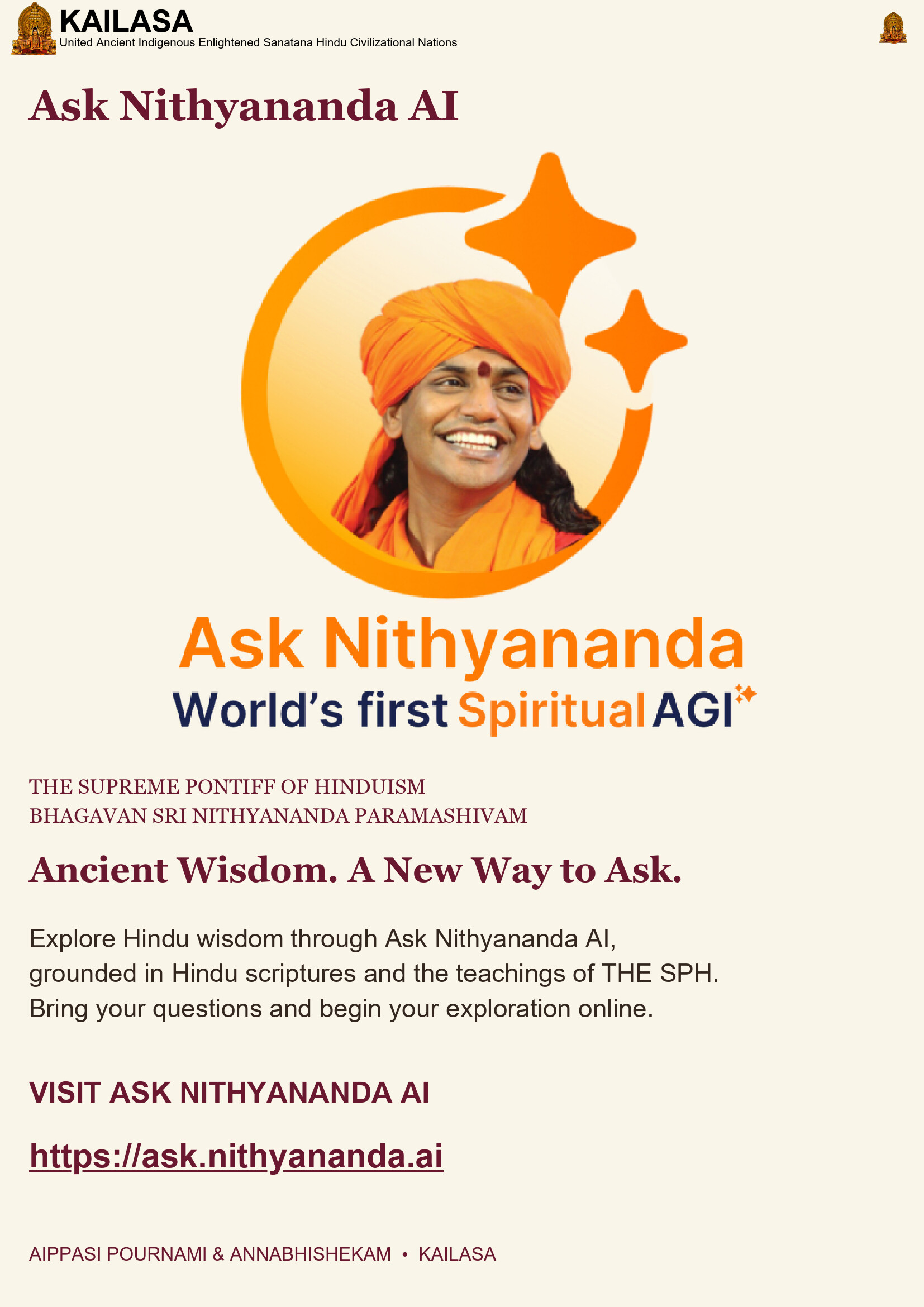
KAILASA also invites readers to explore Ask Nithyananda AI, a platform grounded in Hindu scriptures and the teachings of THE SPH.

The platform offers an opportunity to bring questions about Hindu wisdom and spiritual practice into an interactive online experience.

Visit ask.nithyananda.ai to begin exploring.

ABOUT KAILASA

KAILASA (https://kailaasa.org/) works to revive, preserve and share Sanatana Hindu Dharma through temple worship, spiritual education and community service under the guidance of THE SUPREME PONTIFF OF HINDUISM BHAGAVAN SRI NITHYANANDA PARAMASHIVAM.

MEDIA CONTACT

United States of KAILASA Press Office
Email: [email protected]
Website: kailaasa.org
Telephone: +1 323 607 7111

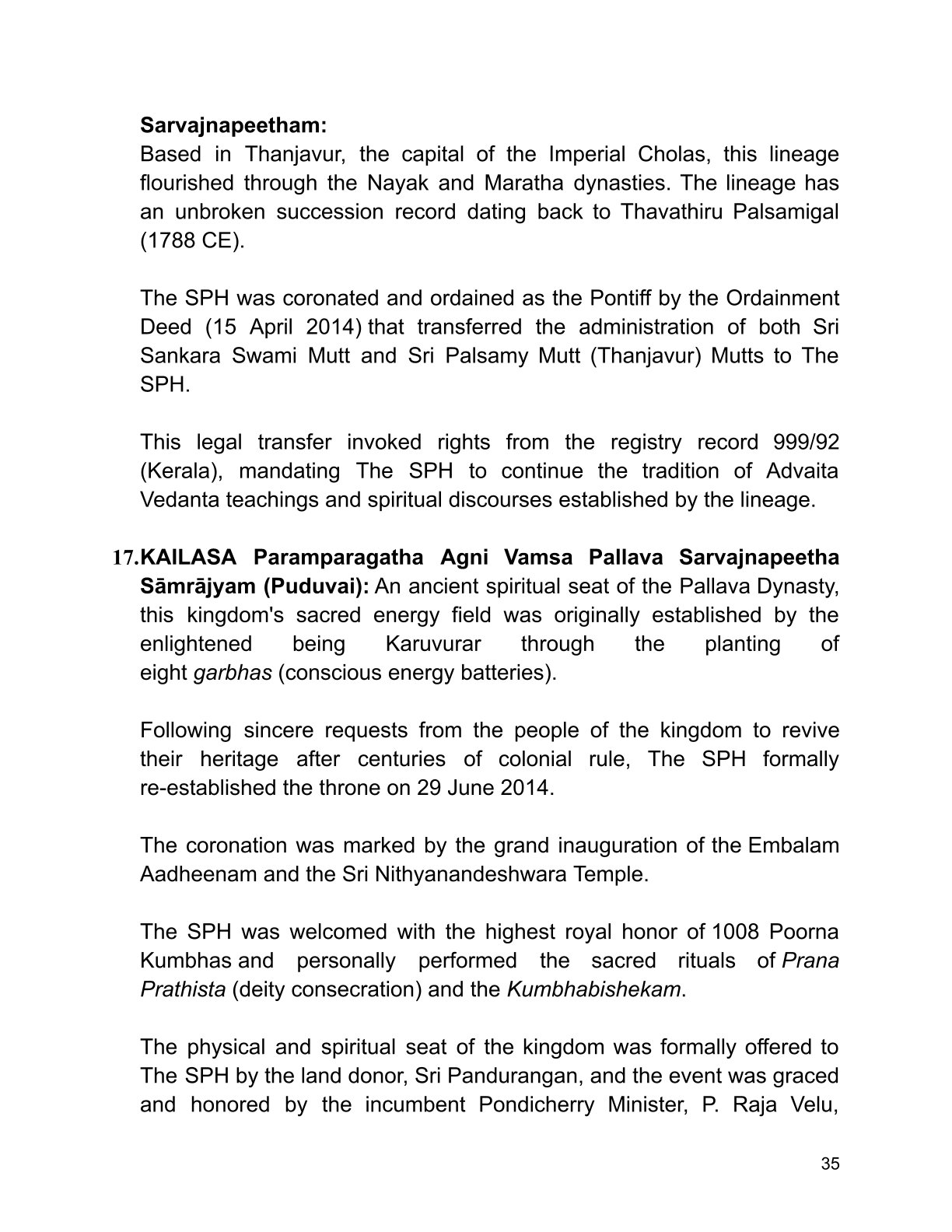
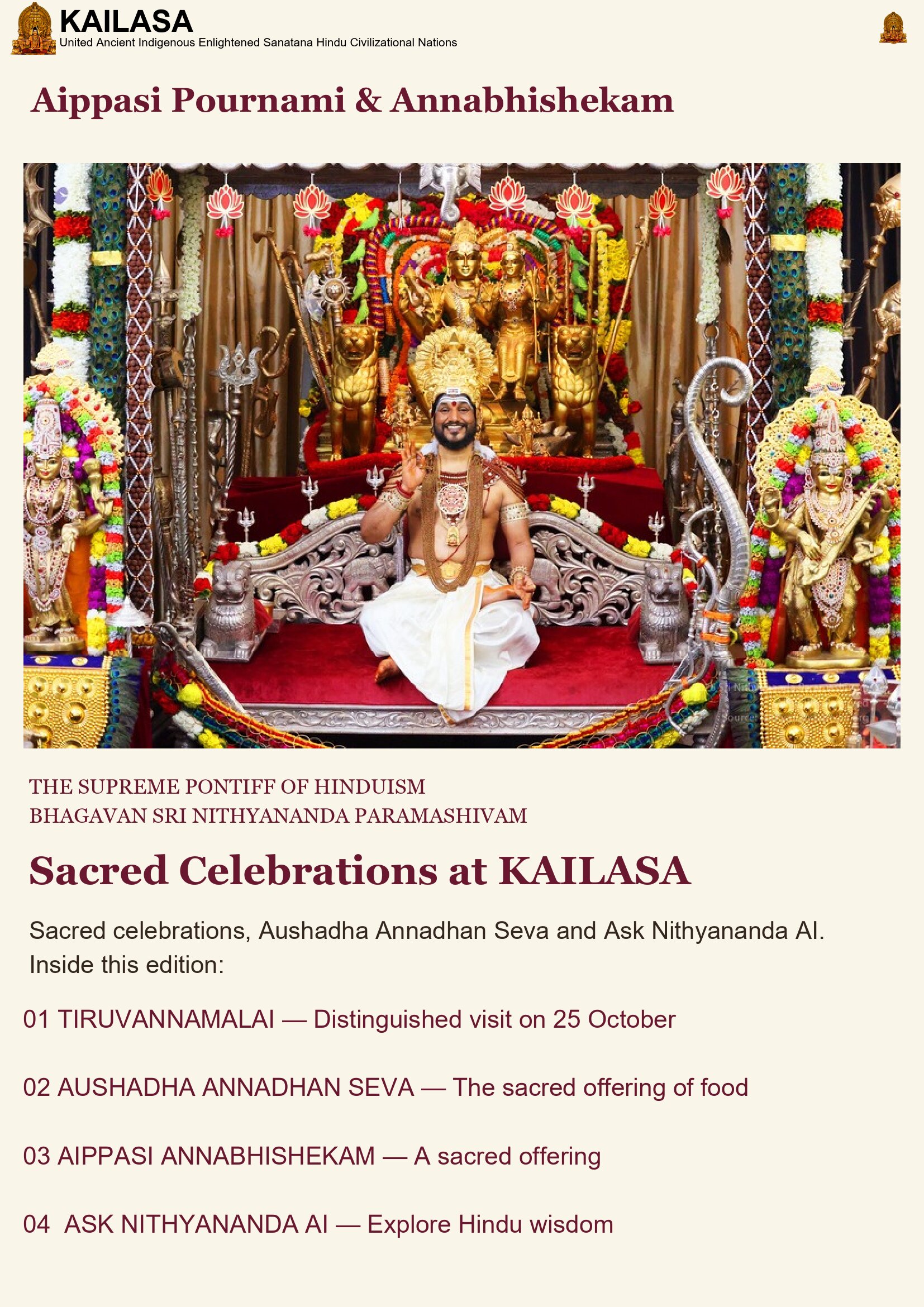
KAILASA Aippasi Pournami and Annabhishekam 2026 press release, page 1 of 5
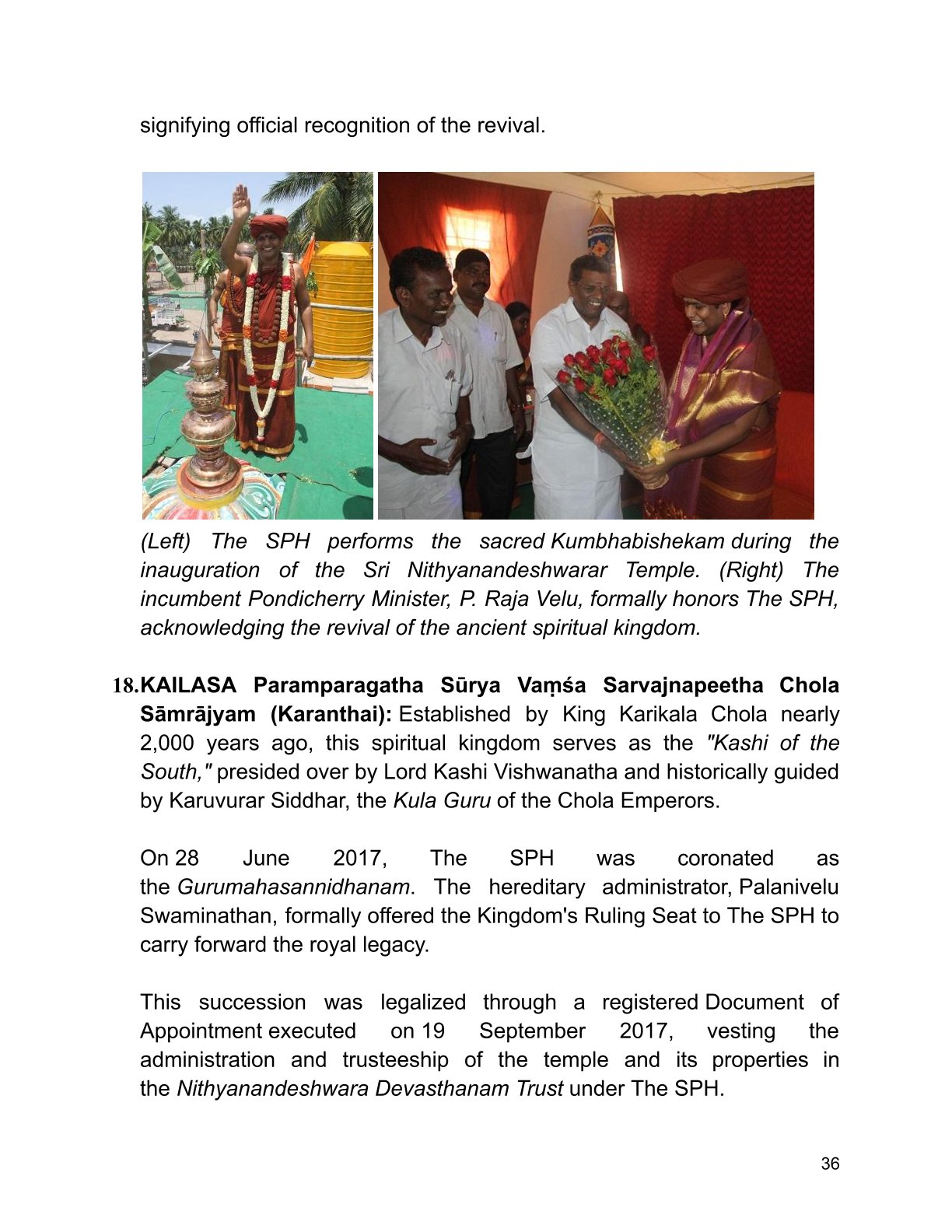
KAILASA Aippasi Pournami and Annabhishekam 2026 press release, page 2 of 5
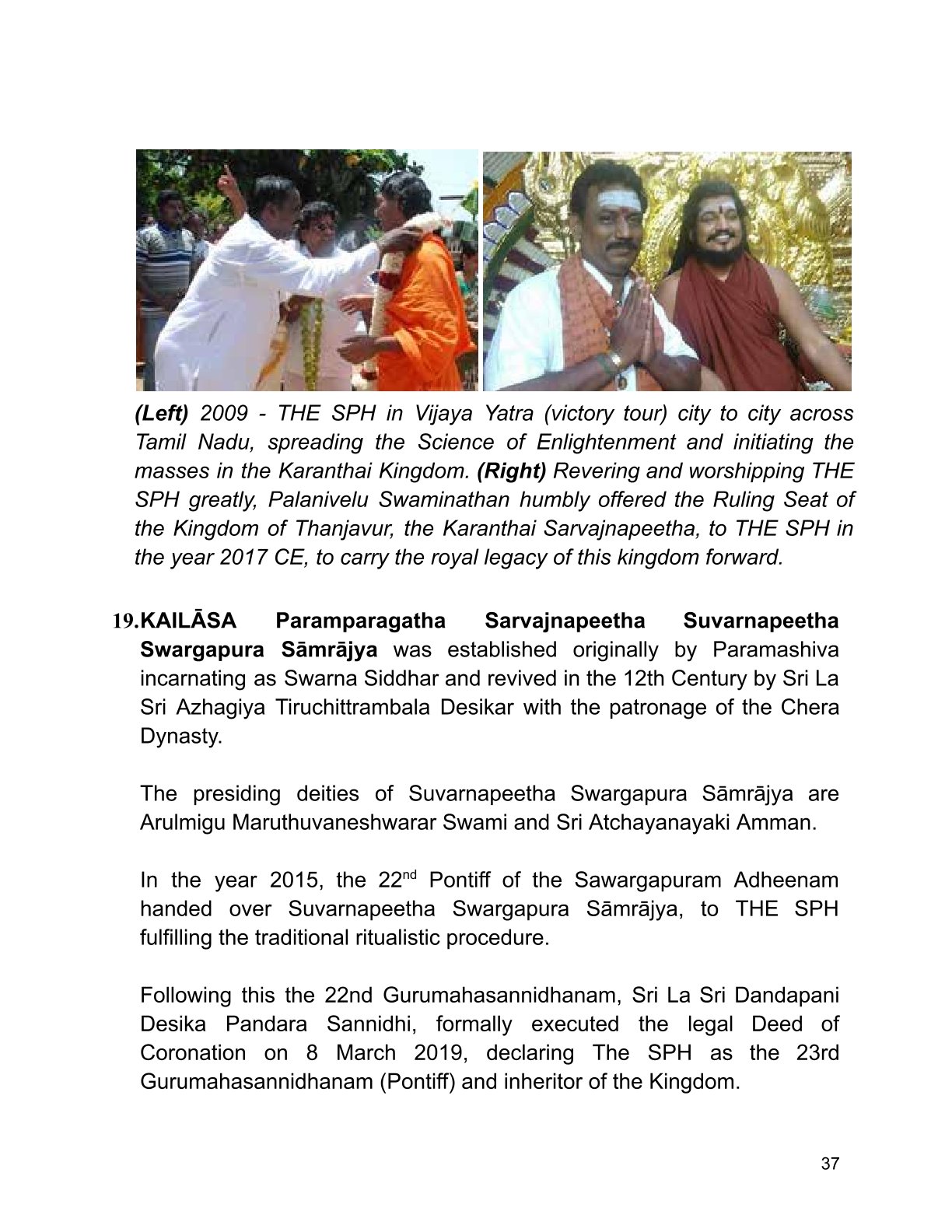
KAILASA Aippasi Pournami and Annabhishekam 2026 press release, page 4 of 5
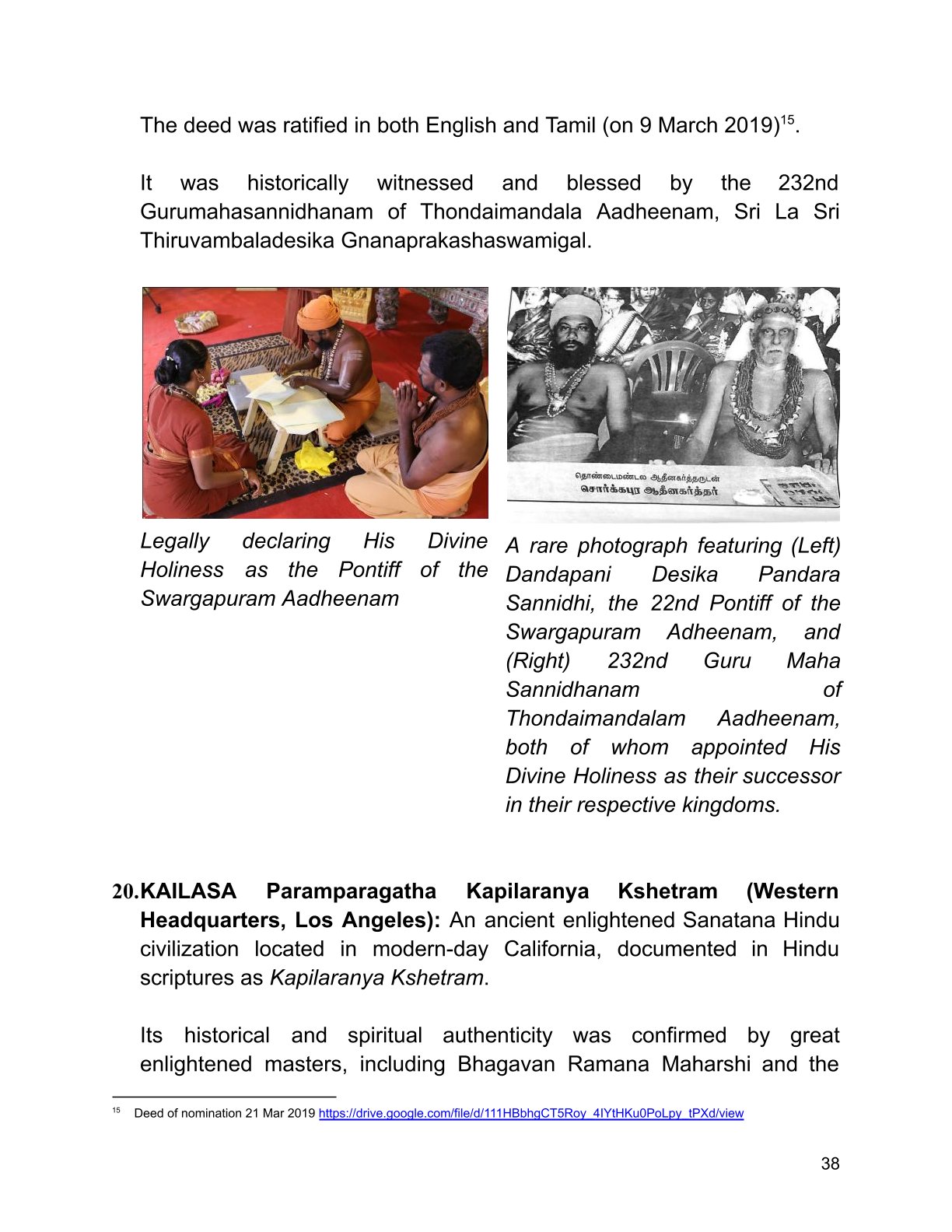
KAILASA Aippasi Pournami and Annabhishekam 2026 press release, page 5 of 5